Showing posts with label commodities. Show all posts

Saturday, March 3, 2018

Jeff Desjardins — China’s Staggering Demand for Commodities

>50% of all steel, cement, nickel, and copper goes there
Visual Capitalist

See also

18 Cognitive Bias Examples Show Why Mental Mistakes Get Made

Thursday, July 14, 2016

Inflation picking up. Wage pressures mounting.

I have been saying that wage pressures are mounting. The evidence is clear. In my MMT Trader report I have included this chart below.

Inflation


This is the current. up-to-date, snapshot on Employment and Withholding Tax Deposits flowing to the Treasury. It is accelerating. This is an indication of mounting wage pressures and a significant tightening in the labor market.

Producer prices up 0.5% in today's report. Forecasts were for a 0.3% rise. Tomorrow, CPI and that will be a shocker, too.

Treasuries are a sale. Fed will resume rate hikes soon.

Dollar going down. Commodities, gold, stocks, emerging markets, all going up. That's where you want to be.

Tuesday, February 23, 2016

Win David Einhorn's money (or his clients' money)


David Einhorn is the best contrarian indicator you can imagine. The guy loses on everything. He's taken over the mantle from Bill Gross.

After six years of falling commodity prices guess what Einhorn is betting on? Falling commodity prices. He is shorting industrial stocks.

This is the guy who bought gold because he thought that QE and the monetary operations of the Fed and other central banks would create hyperinflation.

What a genius.

(Who gives these guys money? Their parents?)

He got crushed last year on bad stock bets.

The only time this guy ever made money was when he shorted stock and got his pals in the media to make up fake, negative stories about the company. I interviewed him on my radio show some years back and questioned him about one of those episodes where it was well documented that he went after a viable company and spread dirt just to make money.

Einhorn is scum. Guys like him are scum. They suck and they're totally clueless.

Go get yourself some money. Buy commodities, buy industrial stocks. I'm doing it.

Folks, this is almost too easy. These guys make it too easy.

Wednesday, December 16, 2015

You can go buy gold, oil and commodities now. The Fed has just raised prices.

Fed raises rates

The Fed, in its statement (and it's endless wisdom) says that inflation expectations are "well anchored." Well, yeah, maybe they have been, but that's because the Fed itself has been setting prices lower. The cost of money and credit--the interest rate--is a price. A very important price. All other prices tend ot hinge off that price. So if the Fed is so concerned about keeping inflation expectations well anchored why did it just raise prices today?

Totally stupid.

Uh, boys and girls, you can probably start buying gold, oil and commodities now. The Fed has just given you the green light.

Friday, August 14, 2015

Bet against the fools when the Fed raises rates. It's a lock!

Mike Norman Economics

They were all wrong about monetary policy and in particular the rate cuts, ZIRP, QE, balance sheet expansion, everything. They had it all wrong. 

People like Schiff, Faber, Rogers, Reinhart & Rogoff, Bill Gross, Martin Feldstein, the GOP, Obama, and so many more. Quacks and elite quacks. Ideologues. Snake oil salesmen and snake oil saleswomen.

We were told that interest rates would spike, there was going to be hyperinflation, gold would soar to $5,000 an ounce or higher, the dollar would get crushed, yada, yada, yada.

Some are still saying it.

Now as we are on the verge of the first rate hike in seven years many of these same quacks and fools are warning of dire consequences. They're saying that the Fed has no room to "undo" what it did, that it will bring on dire consequences, that the bubble it created will blow up with a ferocity of the Bikini Atoll H-bomb test.

What do YOU think will happen?

I'll tell you what I think will happen. The exact opposite of what the aforementioned, "Gang of Clueless" think is going to happen.

Even if I didn't know a stick of economics (MMT economics), I would bet the ranch and do the opposite of whatever those idiots say just because they've been sooo wrong for so long on so many things. Now they're talking about the dire consequences of  the coming rate hike cycle.

Ha!

Wild horses couldn't keep me from betting against these fools even if I knew nothing.

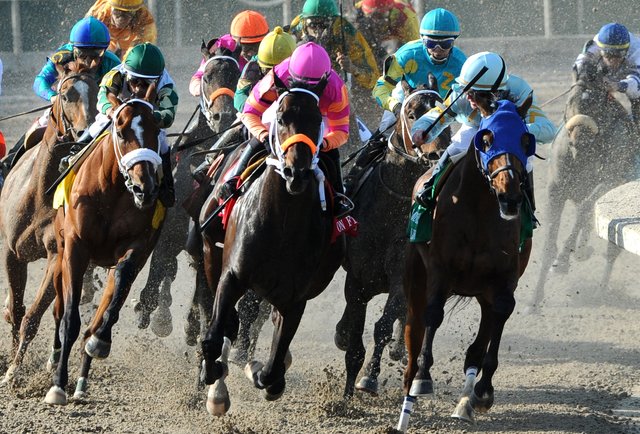
Any good horse racing handicapper will tell you that you always bet on form. If a horse is prone to winning and if that horse is prone to winning even more consistently under certain conditions then you bet and you bet aggressively. But these horses are prone to BEING WRONG AND LOSING! So I will bet heavily against them.

That’s what I will be doing.

So...rate hikes? Yep...and stocks soar, dollar crashes, commodities finally get off the floor.

Why? 

Because it's the opposite of what we've been doing for the last eight years, which has been to cut rates, strip the economy of assets (central banks are doing this) and take income away from people. 

Sure, you're helping a few folks get cheaper credit, but they have to pay it back to the banks so the banks are the ones who earn and more importantly, lower rates set the price lower of many other things.

On the other hand, when the government starts issuing people checks--I don't care whether that's a Social Security check or a payment to a doctor via Medicare or INTEREST PAYMENTS--that's  money to keep and money to spend and that's a fiscal stimulus.

The past eight years have been deflationary. The idiots got it wrong. WE got it right. The next few years of rate hikes will start the boom cycle again. Buy stocks, buy commodities, short the dollar, short bonds, clean up make a fortune and invite me on your sailboat or yacht, but make sure it's somewhere warm where the water's nice and clear. 


Saturday, November 29, 2014

1-week left to sign up for Andy Hecht's intensive commodity trading course!

Will you be ready for the next big commodity cycle?


It's only a matter of time before we once again see gargantuan moves in energy, metals, grains and soft commodities.

How will you trade them? How will your investment portfolio benefit?

Why not have a world renown commodity expert teach you how to trade the commodity markets!

Andy Hecht has been trading commodities for 35 years, including 20 years at Phibro, one of the world's most profitable and secretive commodity trading firms. Andy traded huge cargoes of metals, energy and agricultural commodiites.
Next Saturday, December 6, Andy will be giving an all-day, online intensive commodity trading course where he will teach you his secrets to successful commodity trading.

Learn...

  • How the markets themselves cue you in to true fundamentals
  • Who the major players are and what they are doing
  • How to use technicals to grab profits away from funds and poorly informed speculators
  • Build a commodity component that will bring in big returns to your investment portfolio
  • How to arbitrage markets against each other for low risk, high profit gains
Plus...much, much, more!
The course will be taught online using Cisco's Webex platform. No special software is needed. It will be recorded for you to have for further review at your convenience.

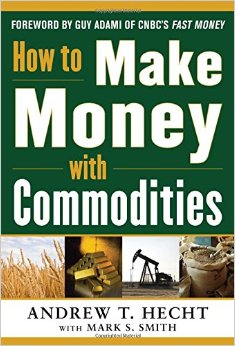
In addition, attendees will get a copy of Andy's highly acclaimed book, "How to Make Money with Commodities."
Commodity Trading Course

Don't wait. Learn how to trade commodities from a pro. Sign up now for this one time opportunity while there is still space. Course fee is $995. Saturday, December 6, 9am - 4pm EST.

Sign me up...I want professional commodity trader Andy Hecht to teach me how to trade commodities!


Thursday, May 15, 2014

Get ready for massive grain rallies and higher food prices as a monster El Nino develops

Do yourself a favor and open a commodity account or get long some of these commodity ETF's like the Teucrium family of funds' CORN, SOYB, CANE and WEAT.

Data from ocean-observing satellites and other ocean sensors indicate that El Niño conditions appear to be developing in the equatorial Pacific Ocean. Conditions in May 2014 bear some similarities to those of May 1997, a year that brought one of the most potent El Niño events of the 20th century.
During an El Niño, easterly trade winds in the Pacific falter and allow giant waves of warm water — known as Kelvin waves — to drift across from the western Pacific toward South America. Surface waters in the central and eastern Pacific become significantly warmer than normal, altering weather patterns and affecting fisheries along the west coasts of the Americas. El Niño also can have a significant influence on weather and climate far from the tropics.

You can make BIG money here (especially in Ag futures) if this developing El Nino produces the effects that it did in the late 90s.


Sunday, October 6, 2013

Worldwatch Institute: the commodities super-cycle


Super-cycle over, or just a pause?

Randy Wray has been predicting a reversal of the super-cycle, with a significant fall in prices since 2008. See The Biggest Bubble of All Time: Commodities Market Speculation (September 22nd, 2011) and The Biggest Commodity Bubble of All Time: Response to Critics (September 23rd, 2011).

Real-World Economics Review Blog
From the Worldwatch Institute: the commodities super-cycle
Merijn Knibbe


Saturday, June 1, 2013

Sasha Breger — How Big Finance is Eating the World’s Lunch Agricultural Wealth

If you hear a kind of whooshing, rushing noise, don’t worry—it’s not US jobs moving to China. Today’s great sucking sound is the sound of agricultural wealth being siphoned off into the global financial system. Dragging poverty and insecurity in its wake, this broad movement of wealth from agriculture into finance is enriching and empowering finance capital at the expense of farmers, traders, consumers, rural communities and the earth. In fact, that sucking sound is really the sound of injustice.
Finance capital globally deploys a huge variety of methods and techniques that generally serve to redistribute wealth from agriculture to finance. These include debt, farmland acquisition, commodity hoarding, and derivative and insurance markets. In the following posts, I outline the wealth transfer mechanism in each of these contexts, focusing largely on new data and evidence from the past several years.
Naked Capitalism
Sasha Breger: How Big Finance is Eating the World’s Lunch Agricultural Wealth


Friday, May 31, 2013

John Upton — Japan and other nations say no to U.S. wheat, worried about GMOs

Japan cancelled a bid on 27,500 tons of Pacific Northwest wheat on Thursday....
Other international buyers also reacted negatively to the news, with South Korea suspending its tenders to import U.S. wheat and European Union countries being urged to step up genetic testing of American imports. Taiwan said it may seek assurances that all imported wheat from the U.S. is GMO-free, the Wall Street Journal‘s MarketWatch reports.
Grist
Japan and other nations say no to U.S. wheat, worried about GMOs
John Upton

Sunday, March 24, 2013

Lord Keynes — US Inflation Rates (1946–1987), Keynesianism and Stagflation


Lord Keynes explains Seventies stagflation in terms of 1) wage pressure due to increased labor bargaining power, 2) dismantling of commodity buffer stock policies, 3) collapse of Bretton Woods, and 4) oil crisis. Bookmark it.

Social Democracy for the 21st Century

US Inflation Rates (1946–1987), Keynesianism and Stagflation
Lord Keynes

Monday, November 19, 2012

Joe Weisenthal — The Analyst Calling The End Of The Commodity Boom Has Made One Spectacularly Timed Call You Need To Know About

The big news in the world of Wall Street calls today was Citi's Edward Morse calling the end of the commodity Super-Cycle. The argument, basically, is that the age of investment-led Chinese growth is over (giving the way to household consumption-led growth) and that this shift would have a profound negative impact on the rate of demand growth in all sorts of industrial commodities. Add in booming supply in more areas (E.G. Iraq and US oil) and you have the case for the end of the great commodity bull run. And really this is huge given how long the commodity bull story has been a thing.

So should you listen to Morse?
Well beyond the logic of his call (which is spelled out in a note that's over 100 pages) he also has one well-timed call to his name
Take a time machine back to 2008, back when he was at Lehman, and oil was going into the nosebleeds....
Business Insider
The Analyst Calling The End Of The Commodity Boom Has Made One Spectacularly Timed Call You Need To Know About
Joe Weisenthal

Randy Wray, then Jeremy Grantham, and now Edward Morse.

Sunday, September 16, 2012

Michael Pettis — By 2015 hard commodity prices will have collapsed


Michael Pettis joins Randy Wray in predicting a commodity collapse in the works.

China Financial Markets
By 2015 hard commodity prices will have collapsed
Michael Pettis
This has created a selection process that favors accumulation. Companies that prefer to hold more, rather than less, inventory of commodities and goods in which commodities are a high cost component have outperformed their rivals, and so the whole market has moved towards a preference for stockpiling, much in the same way that, according to Hyman Minsky, periods of stable or rising asset prices force the financial system into taking on excessive risk. [emphasis added]
Since overstocking has always been a winning strategy until very recently, it is a pretty safe bet to assume that Chinese traders, speculators, end-users and investors have a built-in prejudice towards being long or longer inventory.
The overstocking problem in part has also had to do with financing constraints. In late 2010 and early 2011 in this newsletter I wrote often about commodity inventory financing as a popular tactic among Chinese businesses and banks aimed at getting around regulatory constraints on lending.
By importing commodities that were funded through trade financing and then using inventory receipts to borrow domestically, banks and borrowers could get around lending restrictions.  We have never been able to figure out exactly how much of this was going on, but there was plenty of anecdotal evidence to suggest that this was a pretty wide-spread scheme and it involved a variety of commodities – copper, most famously, but also soy, magnesium, cotton, rubber and several others.
Finally, I should add that in China there is, more than in any other country I know, a sense that physical ownership of commodities or of commodity producing facilities creates substantial intangible benefits. This may be a legacy of Maoist perceptions of self-sufficiency, or it may have to do with a history of unstable political and monetary arrangements, but whatever the reason Chinese are often obsessed with the need for physical control of commodities.
The result has been a tendency to hold much larger commodity inventories than can be justified by business needs and risk management concerns.

Friday, August 24, 2012

Frederick Kaufman — How Goldman Sachs Created the Food Crisis

Don't blame American appetites, rising oil prices, or genetically modified crops for rising food prices. Wall Street's at fault for the spiraling cost of food.
Foreign Policy
(h/t Yves Smith at Naked Capitalism)
Then, in 1999, the Commodities Futures Trading Commission deregulated futures markets. All of a sudden, bankers could take as large a position in grains as they liked, an opportunity that had, since the Great Depression, only been available to those who actually had something to do with the production of our food.

Thursday, August 16, 2012

Jeremy Grantham — ‘Welcome to Dystopia’

Summary of the Summary: We are five years into a severe global food crisis that is very unlikely to go away. It will threaten poor countries with increased malnutrition and starvation and even collapse. Resource squabbles and waves of food-induced migration will threaten global stability and global growth. This threat is badly underestimated by almost everybody and all institutions with the possible exception of some military establishments.
Climate Progress
Jeremy Grantham on ‘Welcome to Dystopia’: We Are ‘Entering A Long-Term And Politically Dangerous Food Crisis’
Jeremy Grantham

Sunday, June 10, 2012

Revisiting my bearish commodity/currency/inflation call that I made back in February and debunking the myth of Fed "money printing"

This was right on the money. Had you sold commodities, currencies, gold, stocks and other risk assets (and bought bonds and the dollar) around that time, you'd be laughing all the way to the bank right now.

Tuesday, May 15, 2012

Payam Sharifi — Quantitative Easing and Commodity Prices: An MMT Approach

One of the most common observations I make as I frequent the comments section of MMT blogs are the arguments in objection to it. When one mentions “keystrokes”, these posters immediately think of Weimar Germany and machines printing money and throwing them out into the streets (via helicopter or otherwise). After these commentators understand (through the help of other posters) that MMT notes that inflation is the only possible constraint to the issuer of a sovereign currency, they typically have their “gotcha” moment. Quantitative Easing (QE), they note, has been responsible for higher commodity prices and hence, MMT’ers are a bunch of crazy fanatics who want to turn the nation and the world into Weimar (or Zimbabwe). The even larger implication is that enacting goals for the public purpose is not something the government should be involved with. The view that QE is responsible for higher commodity prices is not entirely without merit, but not for reasons typically ascribed to it. By understanding the institutional aspects that MMT describes, one will understand not only the real transmission mechanism but also some other problems and solutions associated with higher energy prices. This post makes an outline of these issues.
Read it at New Economic Perspectives
Quantitative Easing and Commodity Prices: An MMT Approach
by Payam Sharifi
The author is currently pursuing his Ph.D. in Economics and Public Administration at the University of Missouri – Kansas City