Showing posts with label economy. Show all posts

Sunday, September 9, 2018

Deficit balloons to $980 bln. Where are all the MMT gods cheering this??

A giant end-of-month spending spree in August has ballooned the Federal defiicit to $980 bln and 4.8% of GDP.

This is the largest nominal deficit since 2009 and the largest as a percentage of GDP since 2012.

The MMT gods should be cheering this. They're not. Weird.

deficit, Federal deficit, money printing, economic boom

deficit, US deficit, money printing, economy, economic boom


Thursday, June 23, 2016

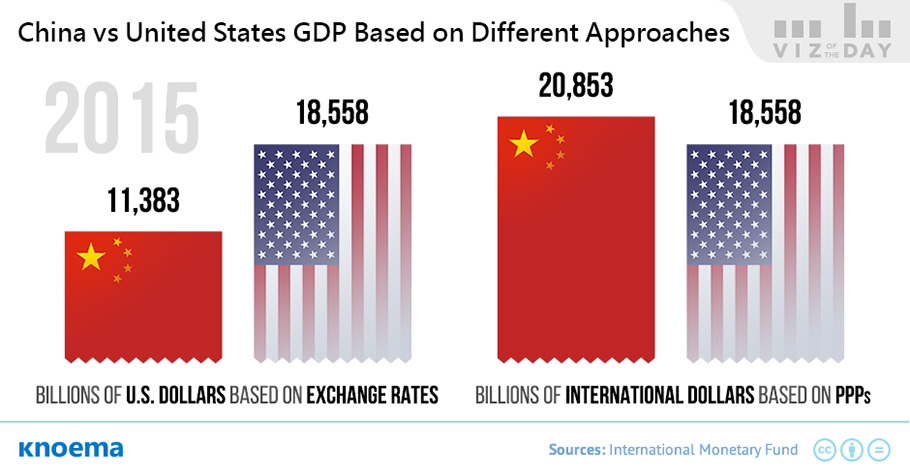
Knoema — The world’s largest economy: China or the United States?


Take the defense budget. While the actual figures are a state secret, the reported figures show the US to be greatly outspending China with the implication that the US military is larger than the PLA. That may be a false implication, however, since China has nowhere near the economic rent in military expenditure that the US does. That means bigger bang for the buck since more of the expenditure goes into production.

Real-World Economics Review Blog
The world’s largest economy: China or the United States?

Monday, April 18, 2016

Latest issue of the MMT Trader is available. Sign up for your 30-day free trial today!

This week's issue of my MMT Trader is now available.

This is the only report of its kind. I break down and analyze the fiscal flows from the Daily Treasury Statement (nobody does that) as well as look at market developments, mainstream economic data, policy, etc, all in the context of MMT.

As you know the economic and market calls here have been the best anywhere. It's all in this report.

Sign up for a 30-day free trial today.


Friday, March 4, 2016

We got it ALL correct. Here. At MNE. Not anywhere else. Not even at other MMT sites.

We were following flows, not defiicts.

We got it all correct--the economy, stocks, gold, the dollar. Go back and do a search here on any of these terms and see how we called it. And you didn't have to wait three years (or more) and watch markets and economic forecasts go wrong in your face.

We called it precisely.

No need to go anywhere else.

Sunday, February 7, 2016

IRS computer glitch a problem.Throws economy into peril. Stock market could be looking at fresh lows

The IRS computer glitch that occurred 10 days ago is a problem. Tax refunds are not going out. Spending has dropped down sharply versus last year. It had been up, modestly, but now it's fallen off and it's not obvious that the economy can handle any gov't spending pullback now when people are really on the defensive. Data from the Daily Treasury Statement does not show tax refunds picking up very much. Stock market could be looking at fresh lows.

Tuesday, July 7, 2015

My friend calls and asks, "Mike, whaddya think now?" Here's what I said...

My friend who's a stockbroker called me up earlier and asked what I thought now that all this stuff has transpired.

Here's what I said.

First of all I said that austerity is not dead. (I put up a post on this earlier.) You can forget about it. I've been seeing a bunch of stuff about how this is the beginning of the end of austerity, but I think that's wishful, no, naïve, thinking. There's no way that the "Powers that Be," the elites, the oligarchs, whatever you want to call them, are going to relinquish their absolute hold on power. No effen way. And we cannot "take it back by force." You can forget that, too. Law enforcement, the military, the entire national security apparatus is controlled by them. This is not 1776 and we're gonna wage some guerrilla war against our oppressors. I don't care how many guns you have (Texans) if they want us on lockdown they will have us on lockdown.

Okay, sorry, I'm digressing a bit.

With austerity the European economic slow motion train wreck continues. That means the euro goes lower. That is the "counterbalance" to declining internal demand. The euro goes lower because European exporters (read: German and to a lesser extent, French firms) make price cutting an ongoing thing. Sure, they'll take a break once in a while, like now, because sales are booming at these lower exchange rates, but soon consumers (i.e. Americans) will want better deals or, the Japanese and China will force that to happen by undercutting the Germans.

So, the euro  is going down, slowly. There's no "getting harder to get" bullshit. (Although  for the Greeks the  euro truly is getting harder to get, unfortunately.) Anyway it's always about price and not quantity. People should know that.

Next, in the U.S. the key number is $4 trillion. Matt Franko and I have been saying this for five years. Four trillion is the top line spending of the Federal Government. We have not been under that since 2008 and since 2009 (the first year we topped $4 trillion gross spending) the stock market and economy have been rising/growing.

The deficit?

Forget it. Those who have been focusing on that have been wrong. You'd think that a $1.2 TRILLION REDUCTION in the deficit since 2012 would have made them scratch their heads and wonder about their predictions by now, but they keep on going. I'll say this again (and Matt Franko has said it here a million times), the deficit is EX POST. It's what's left over after everyone spends/earns/pays taxes.

That means we don't even know what the deficit is going to be unless the government first spends its money. It's that top line expenditure that flows to income and investment. It goes to firms and individuals who then and only then know what their tax liability is going to be. What's left AFTER that is the deficit. The deficit (or surplus) is the savings (or deficit) of the non-government. We cannot predict what effect savings will have on the economy other than to say the ACT of saving was a demand leakage. On the other hand, what the government spends will ALWAYS have an effect because that is DEMAND by definition and it is immediate.

I'll even go one step further. I'll say that the government can and likely will, go into SURPLUS and it still won't cause a recession. Why? Because the private sector can handle much more debt now than was the case back in 2007. Back in 2007 total monthly debt service payments as a percentage of disposable income was over 18%--a post WWII record. (Maybe an absolute record, too, I don't know.) Now, total  debt service as a percent of disposable income is down around 15%. That may not seem like much of a difference, but the current debt burden is at 30 year low. That means the private sector can "finance" much smaller government deficits and even a surplus (maybe even a big one) before getting into trouble.

Therefore, the economy will grow, maybe not strongly, but it will grow. And stocks will go up. That will frustrate a lot of people, I am sure. This will all be interspersed with mini-panics about Greece and Europe (and maybe China, too), but you have to be a buyer of those panics. As long as the government keeps spending its $4 trillion annually, that'll be enough to float the boats and allow the S&P companies to make their $1.8 trillion or so in profits.

Oh yeah, there  is one caveat: at some point we will have to deal with the debt ceiling again. We haven't had to do that because tax revenues are going gangbusters and Jack Lew has the  Treasury's coffers flush with cash, but that will not go on forever. At some point as the economy stays tepid, tax  revenues will become insufficient to allow the government to continue operating under the debt ceiling. That's when things could get rocky. Who knows? We could even have our own, "mini-Greece" over here. We came close a couple of times and the "moron content" of Washington has grown exponentially since then.

For now, however, it'll be steady as she goes. Just as I laid out I think and we'll be keeping an eye on the all important spending numbers here at Mike Norman Economics. Just keep tunin' in.

Tuesday, May 12, 2015

Economy may be at "stall speed"


I know the jobs report bounced back and everyone got all excited and clearly, it's a good sign because it would have been a nail in the coffin, I think, for the growth trend for the remainder of the year had that not happened.

However, looking at Federal Government spending trends--and there is the risk that I am getting too "micro" in my analysis, here, but nonetheless--it seems to me that spending data has slowed to a stall, at least the way I see it, and that suggests the economy is also at a stall.

Spending could pick up and, admittedly, it is looking a little bit better now than it looked around the first and second weeks in April and I understand that April, being tax month, is when individual and firms' bank accounts get drained so there is some seasonality at play here.

With respect to that latter comment, being that this is the seasonal, "Sell in May and go away" period and the market is hanging in there pretty well (i.e. undergoing perhaps a "churning" correction), then things may actually not be all that bad.

I will see in the coming days, based off flows from the DTS, what it looks like.

#Itsnotaboutthedeficit


Wednesday, May 6, 2015

Stocks and economy could be in trouble


Recently I have been commenting that the projected, $4.3 trillion in topline government spending is not going to be sufficient to  keep the economy from achieving anything more than zero growth and actually, we probably had negative growth in the first quarter because when the revision comes in later this month it will take into account the huge trade deficit.

Normally, a $4.3 trillion spending pace would be excellent. Indeed, that would only be the second annual spending increase since 2009 and it would be far larger than the measly $10 billion we saw last year versus FY 2013. (This year projected near a $200 billion increase.)

The size of that increase might already be in trouble, but I'll get to that in a minute; it's not the reason for my worries.

My concerns stem from the fact that we are seeing a serious slowdown in Personal Consumption Expenditures, which is the largest component of GDP and additionally, an actual contraction in State and Local Government spending.

Those two elements of GDP are conspiring to put growth in negative territory and while some say it was just a weather related abberation, I am not so sure. We may get a better sense on Friday when the April jobs figures are released, but if they're weak once again (and the numbers from the Daily Treasury Stateement ARE NOT encouraging), then it seems it could be more than weather at play.

All of this would be bad enough on its own, but I also alluded to the fact that the pace of government spending in the last month has been starting to slow. Early on in April spending for FY 2015 was running about $110 billion above FY 2014, but that number has recently dropped to $94 billion. Still a nice positive, but not on target to hit that $200 billion increase year-over-year.

What's also bad is the following:

  1. We are currently operating under a debt ceiling and without a budget agreement out of Congress
  2. The debt ceiling has not had an impact yet and Lew has not had to really engage extraordinary m easures to pay bills because tax revenues have been on the high side.
  3. However, tax revenues will start to fall off significantly if the economy is indeed in a contraction, which I believe it is.
  4. That's when the debt ceiling and all kinds of hell will break loose.

What does this mean for the markets?

  1. Stocks are in trouble.
  2. The dollar is in trouble (Bill Gross may actually get one right!)
  3. The Fed will not raise rates and that whole entire expectation will get blown up.
  4. Bonds  likely to rally sharply and Fed could engage in new monetary measures, but only after significant time and disruption. This is not the Bernanke Fed nor is it the Paulson Treasury. These people WILL NOT MOVE  QUICKLY.

In addition, fiscally, it looks like a train wreck because every single policy maker out there, no matter whether they're on the right or the left, thinks we have to balance the budget. So does the public.

What it all means is that this could end up to be a really bad ride.

So, I think here's the way to play it:

  1. Sell the dollar.
  2. Hedge your stocks or stay in cash and wait for a time to buy aggressively, but it probably won't be for a while.
  3. Step aside as the real estate bubble implodes, especially in the high priced bubble areas like NYC. (Manhattan, for sure.)

Monday, March 9, 2015

Tuesday, March 3, 2015

If SCOTUS kills the subsidy part of Obamacare, the economy will feel it and stock rally will be over


The Supreme Court will be hearing arguments soon on whether or not the government subsidies given out under Obamacare are legal. If they strike down the subsidy part of the law--and that's a distinct possibility--then the law itself will be impaired and might not survive.

Even if the law survives, removing the government subsidies could result in a serious blow to the economy and could send the stock market tumbling.

Subsidies aside, Federal Government  spending on health care has increased significantly since the law went into effect. In 2012, before the mandate, Federal outlays for Medicare and Medicaid totaled $814 billion. In 2013 when the mandate to have insurance was postponed for a year, spending on Medicare and Medicaid was $845 billion, an increase of 3.8%.

However, in 2014 when the law took effect, health care spending surged by $84 billion to $929 billion, a 10% increase. We will probably see another $16 billion more for this year.

Here is how the  last three year looks with this year projected.


You can see from these numbers how much the economy can potentially lose. We can go back to very near the pre-Obamacare spending numbers, which means lopping off about $100 billion annually from total spending. That would be a big hit, not to mention the other economic destruction that would come from not raising the debt ceiling. The latter would put the Federal government on a "balanced budget" mode of operation, which would be a disaster.

Thursday, December 4, 2014

A Particularly Messy ‘End-Of-Administration’ Kabuki Dance In "Versailles-on-the-Potomac" - Chuck Spinney

Chuck Spinney writes:
Killing the Hog (II)
(reprinted with permission)

"President Obama’s sacking of defense secretary Chuck Hagel began a particularly messy ‘end-of-administration’ kabuki dance in Versailles on the Potomac. This link will take you to a very insightful interview explaining the nature of this spectacle.

Ian Masters (of the excellent radio show Background Briefing) talks to Pierre Sprey* about the third-tier selection of the industry-friendly Ashton Carter to replace Hagel. But there is much more. The discussion quickly spins off into a wider discussion of the dysfunctional politics of the American Empire and the permanent war economy, before it ends with a brilliant discourse on the Air Force’s plan to kill the A-10 Warthog.

Sprey knows what he is talking about. He understands Pentagon politics as well as anyone I ever met. An engineer and mathematician, a highly accomplished bureaucratic infighter, Sprey was a principal member of the design team that over came massive Air Force resistance to create the highly successful F-16 and A-10 jet-fighter bombers in the late 1960s and early 1970s (see Robert Coram’s, Boyd: The Fighter Pilot Who Changed the Art of War).

In the case of the A-10, Sprey was the both the inspiration and guiding force in its conception and design. He was also the key strategist the bureaucratic battles to stop the Air Force from killing the program — battles that began in late 1960s, when the A-10 was a paper airplane, have continued intermittently to this day, including the current efforts by the Air Force to kill the A-10 over the objections of the Congress.

I urge you to take 20 minutes to listen to the discussion between Ian Masters and Pierre Sprey."  
Chuck Spinney
___________
* "Caveat emptor: Sprey is a long-time associate and close friend of mine. I have had a front row seat in the peanut gallery or been a minor player in the A-10 wars from the time I was a 2nd Lt in the AF in 1968 until I retired from the Office of the Secretary of Defense in 2003. So I freely admit that am proudly biased both with regard to both Sprey’s work and the A-10."

Tuesday, July 15, 2014

There Has To Be A Campaign To Make These Dingbats Stop Trying To Neuter the Fiat

   (Commentary posted by Roger Erickson.)


There's a new farce playing on L Street.

Who's Afraid Of The Big Bad Fiat?
starring NEUTER THE FIAT as arch Deficit Terrorist
If you're afraid of fiat, then of course the CBO's outlook on fiat is frighteningly predictable.

Previous generations were easily frightened by these type of Budget Slasher movies, but younger generations expect more initiative, and more sovereign action. So let's hope & pray that this play runs for only a short time before audiences lose interest.

And if a corporation is a person, surely a culture and an economy are animals too. Do we really want to emasculate AND defeminate both our economy and culture? Why not just drain all the private savings too? Oh, because they'd already be gone, as a consequence of neutering the fiat. I'd advise getting a second opinion before letting these dingbats go on a nip and tuck spree.

The following news release has been edited for clarity, with out-of-context semantics replaced with context-relevant semantics.

---------- Forwarded message ----------
From: [Neuter The Fiat] Campaign
[NEUTER THE FIAT!!!]
For Immediate Release
Date: July 15, 2014
Contact: Jack Deutsch (deutsch@[NeuterTheFiat].org, 202-735-2801)

[Neuter the Fiat] Says CBO's Long-Term Budget Outlook Frightening and Predictable 
The Congressional Budget Office's new long-term budget projections show debt on an unsustainable long-term path. Under CBO's current law projections, [then IF NOTHING CHANGES - even though it always does] debt will grow from less than 74 percent of GDP in today to 80 percent by 2025, will exceed the size of the entire economy in the mid-2030s, and will double GDP after 2080. 
Maya MacGuineas, head of [Neuter the Fiat], made the following comment:
"This report shows just how dire the long-term [private financial savings] situation is. The government's official scorekeeper itself says these [private saving] levels 'would ultimately be unsustainable.' Anyone that looks at the current situation and thinks our [private financial savings] problem is solved just isn't paying attention. 
Unfortunately, the cost of this [private financial savings] isn't abstract. As CBO explains, it would lead to slower growth, higher interest rates, and less flexibility for the government to address new challenges. In only a quarter of a century [if nothing else changes, though it always does], income per person could be $2,000 to $5,000 lower as a result of our growing [private financial savings] levels. 
The [gold-std] lining in this report is that policymakers still have time to act. CBO explains that if policymakers act soon, the [private financial savings] could be reduced with smaller and more gradual changes that can improve economic growth and give people time to plan. 
But if Washington continues to kick the can and avoid dealing with the long-term drivers of our [private financial savings] , the magnitude of changes that will be necessary and the risk of a fiscal crisis will be greater. That's something this country just can't afford."
###
[Huh!? What currency system are these people from?]

For more information about the [Neuter the Fiat] Campaign, please visitwww.NeuterTheFiat.borg.

[Neuter the Fiat] Campaign | 1899 L Street, Suite 225 | Washington | DC | 20036

###
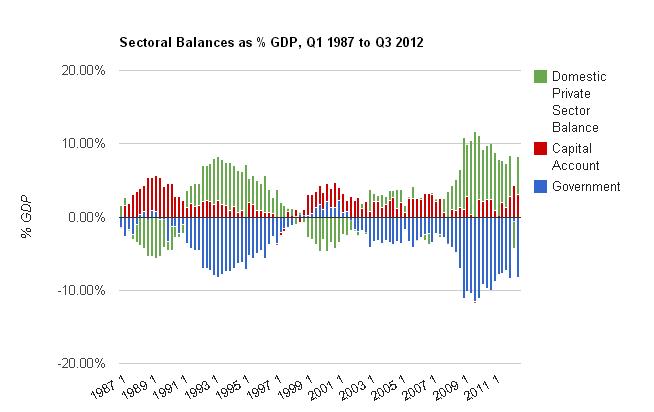
Meanwhile, in the chart below, can they neuter one part without neutering the obligately yoked parts? I'd rather they experiment on themselves, and prove it it a self-neutering clinical trial, before practicing on the rest of us. Where's the Federal Dingbat Administration when we need one?


Thursday, February 6, 2014

Yearly Democracy Vitamin Supplements: Review 1 Marriner Eccles, and Call [One Another] After Cogitating

   (Commentary posted by Roger Erickson)


"VitaFiat" - there's no lethal dose, so even more can't hurt. (Cures mental constipation too.)


Truly astounding reading.
"In 38 pages of testimony, he shocked the senators [of 1933] by not only precisely listing the failures of the economy, but laying out a five-point plan for fixing it."
[You have to wonder. If there were a 2nd Coming, of Marriner Eccles, would US Senators of today not only decline to invite him to testify, they'd impeach and lynch him? Sadly, I'd have to guess yes. Maybe next year WE will be smart enough to select some more learned and intelligent Congresspeople, in BOTH houses? America, Uncle Sam needs YOU ... to select smarter, less sociopathic Congresspeople.]


ps: Eccles was a product of his times, and of course not infallible per all future challenges. He started out thinking in - at least flexible - gold std perspectives, yet nevertheless guided the USA into a currency regime where "money" is backed NOT by static assets limiting policy agility, but instead where a "fiat" currency is instead backed by the underlying dynamic asset of Public Initiative, which, by definition, can always be as agile as policy demands.

Friday, August 9, 2013

Even An Overflowing Crock Eventually Drips A Terse, Accurate Summary?

Commentary by Roger Erickson

Russ Huntley writes: "And damn me, but isn't that a perfect description of cause and effect?"

Why we can kiss the US economy goodbye

Actually, it's an even better illustration & demonstration than it is description.

Why, it nearly mirrors reality!

Makes you wonder what their lobbyists finally looked at, to arrive at the suggestion & order for this particular editorial. The image finally loomed so large that they could no longer see the start of the triggering causality chains?

That's the built in beauty of all biological systems. If they stumble along long enough, they eventually mirror enough context data ... to see themselves in it.

What happens after that is a crap shoot. Depends on whether they recognize their own fingerprints, or just look only for someone else's.

Ask not on whom the crock drips?
  It drips on you? (And yours.)


Tuesday, April 30, 2013

There are People Who Literally Don't Care if the World is Round or Flat. They Just Don't Want to Fall Off the Edge! (??)

Commentary by Roger Erickson

That is, they literally see any & all operations as simply alternative details irrelevant to their ideological aims. For them, they don't care whether the pet is a cat or a guinea pig ... as long as it catches mice. :(

Retired Congressional Staffer Mike Lofgren talks about such people in this article.

Is War Good for the Economy?

The central issue is NOT whether there are or aren't such people in the world. The key question is why we are concentrating such people in supposed "leadership" positions. We NEED to change our selection criteria ... or we'll keep getting what we deserve.


Thursday, January 31, 2013

Economic Surprise Index plummets

And no wonder...fiscal cliff, debt ceiling, payroll tax increase, upcoming sequester. There's a lot that's weighing on economy now.

Sunday, September 16, 2012

WashPost asks: Why Are Stocks Soaring?


Gee, thanks for nothing but a warm feeling in a dark suit, Fed!

Meanwhile, here's why stocks are soaring ... most people have no idea of the details of what actually happens in QE.  Including which bonds are being bought from whom, and what REAL impact it has.

QE dynamics one more time- it’s about price, not quantity

see also
QE2 Two: Equivalent to Issuing Bills in the First Place

and
QE
"QE in the US has again done what it’s always done- frighten investors and portfolio managers ‘out of the dollar’ and into the likes of gold and other commodities."

and
QE and the dollar

and
PIMCO admits Fed’s QE2 Failed to Boost U.S. Spending

and
QE2: Captain, your ship is sinking

and
QE and the term structure of rates

and
Central Bankers comment on QE

and ... (the list could go on, but that should suffice for anyone willing to read any of these posts anyway).

Wednesday, August 8, 2012

National Economy and the Banking System of the United States

   (Commentary posted by Roger Erickson.)


From a comment at Warren Mosler's blog, by MRW. Worth reposting in it's entirety (fixed a few typos for easier reading, and added the Beardsley Ruml link).
This is an awesome example of what our grandparents knew, our parents forgot, and we have to learn again. What will it take to ensure our grandkids don't have to relearn it the hard way?  Carve it into the marble at every Fed building?

MRW Reply: August 4th, 2012 at 3:45 pm

I laughed when Rickards brought up the spectre of German hyperinflation. Keep this post to show your worried friends. Better yet download the whole book.

The quote below was written in 1939 by Richard L Owen, Former Chairman, Committee on Banking and Currency, United States Senate. It was presented to Congress in late January 1939, then sent out for printing at the Government Printing Office.

‘Natch, since this showed up a few months before WWII, who's read it?


Get a load of the title:


National Economy and the Banking System of the United States — An Exposition of the Principles of Modern Monetary Science in Their Relation to the National Economy and the Banking System of the United States
76th Congress, 1st Session, Senate Document 23

http://archive.org/details/NationalEconomyAndTheBankingSystemOfTheUnitedStates
______________________________
_
Chapter XVI, The Inflation Bogey, pg.65
______________________________
_
The old system is vigorously defended. Its advocates and defenders fill the American press with articles dealing with the question of our economic life in which they attribute the evils arising under the existing system to many other causes than the real fundamental cause. Modern monetary science exposes the real cause beyond the possibility of doubt or successful contradiction. But the advocates of the old order, minimize or denounce monetary causes as being responsible for our national distress. The purport of these various articles seems to be to warn the Members of the Senate and House of Representatives and the people against “tinkering with the currency,” against “fiat” money, against “printing press money,” and against the dangers of “inflation.” The experience of Germany following the World War is pointed out as a terrifying example, in which inflation resulted in the destruction of the value of bank deposits, bonds, insurance policies, mortgages, and other evidences of debt, by reducing the German mark to zero value through the inflation of the German mark billions of times.
The term “inflation” has thus been built up as a bogey warning the people against any necessary expansion by using the term as equivalent to a defensible and necessary expansion of the money supply.
These advocates of the old system (which has continuously reproduced one depression after another) seem to rely upon the lack of an informed public opinion. They frighten the people by the bogey of “inflation” as if the advocates of modern monetary science proposed “inflation.” Modern monetary science vigorously opposes “inflation.” It vigorously opposes the “inflation” which has been employed by the sagacious few to profit and to acquire the wealth of the ignorant many.
Modern monetary science proposes an adequate plan by which to prevent inflation for all time.

MRW: "Add this to Ruml’s 1946 “Taxes as Revenues are Obsolete” and I think you can blame WWII and people’s concerns with it as the reason why no one paid attention to what theses gents were trying to explain to Congress."


Thursday, August 2, 2012

""Right wing politics is the most fun when the President is clueless, his party is wimpy and the voters are ignorant"


Classic lines from Rodger Mitchell.

Trying to survive in this world of debt hawk finger pointing and voter remorse. GO BIG!!


Translation: "We Tea Party sycophants bravely demanded that the government "Go Big!" Even a $4 trillion deficit reduction wasn't sufficient. Now, facing a deficit reduction of less than 15% of our "Go Big" amount, we've begun to panic.

"Nobody told us deficit reduction pulls money out of the pockets of the public. How were we supposed to know that?

"Sure, we voted for the law. In fact we insisted on it at the threat of filibuster. In further fact, $4 trillion wasn't enough. But, this isn't our fault. It's the fault of you voters. You're the ones who wanted to cut the deficit. You should have known better."


"We pretend the deficit reduction is too sudden. When we said, GO BIG!, we really meant, 'GO BIG!,' but go really, really slowly big. Like BIG that takes many years."

"Yes, we know, taking dollars out of the economy, no matter how slowly, will hurt the economy. And yes, we know the American public -- especially the lower income 99% -- will take a terrible beating (though the upper 1% will be O.K.)"

"But the important point is: The right wing in Congress, can't lose. When the American worker falls over the fiscal cliff, we'll blame Obama, you voters will believe us, and we'll get elected. Simple."

"Right wing politics is the most fun when the President is clueless, his party is wimpy and the voters are ignorant."


Wednesday, May 30, 2012

Deficit spending at highest level in three months. That's bullish!

The deficit this month is the largest since February. A lot of the money drained from the private sector in April is now being recycled back into the economy in the form of higher spending. This should be supportive. The market selloff is likely reaching a climax.