Definition of "economics": what aristocrats call "creative accounting."

So what does Economic Policy mean? That we have a policy on accounting, aka "economics?"
Isn't that akin to having a policy on records keeping, and art, and photography, and reporting? Yes, it's true Maude. Aristocrats have a policy on all those things, and that core policy is called propaganda - instilling the claim that THEY matter more than YOU, or WE collectively do.
Definition of aristocrats: sociopaths, projecting their value metrics on to us.
Can we fault every idiot for promoting an idiot-centric policy? No. We knew they were idiots before we agreed - possibly out of boredom - to experience the movie.
Can we fault ourselves, for trying to ignore idiots, and even kicking them upstairs where we naively imagine that they can do no harm? YES!!!
That's why trying to use tracking numbers to create, evolve, lead or invent .... is just so brain dead that it's embarrassing. Invented, numeric tracking or feedback metrics are for assessing execution, NOT for selecting milestone goals or aggregate Desired Outcomes. So please cease, forever, the habit of confusing Desired Outcomes with infinite, alternate path progressions. **
Consider this article as an example:
These authors - and commentators - seem to mean well, yet by the faux logic expressed in their article, Quarks owe infinite Planck units to Hadrons, or to something. How will they ever pay that Universal debt? (Doh!)
They've become part of the problem! What does their line of reasoning imply? That the universe is insolvent?
Has S&P lowered the financial rating of homo sapiens yet? :(
Some days it hurts my head just reading the oxymoronic things economists say. It's like reading archaic views about how many pinheads can dance on your view of reality.
Warren Mosler eventually came to his conclusion that "The entire finance industry is more trouble than it's worth."
I'll now add that "The entire discipline of economics has become so misused that it's current use harms more than it helps."

Yet here's a MiddleClassKiller line from the UncleSamOwes article.
Net worth? Net worth to whom? It's not at all clear how to "value" the issuer & user of a set of denominating numbers, or who to delegate the "valuation" process to. Certainly not using those invented numerals themselves! And certainly not by those fixated on uselessly hoarding public fiat!
Could we possibly compound such an error? Only by using such stupidity to craft Desired Outcomes, assess milestone goals and craft policy. No aggregate is that stupid though, right?
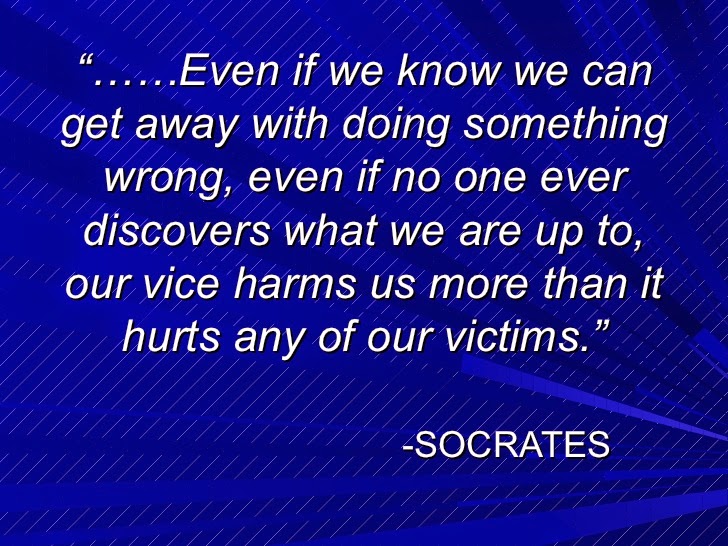
[2000 years later (and at least 3.5 BILLION years after the 1st social molecules), and we're still fitfully rediscovering system dynamics ... and marveling as though it were something novel? Don't weep for your electorate, USA, they may be past saving.]
** [Aristocrats & Economists are the one attempted exception proving the Law of Selective Aggregate-Self-Employment: "Those that know how will always have a job, and those who know why will eventually be their boss - unless we suicidally cede why to how." Good luck trying.]
Can we fault every idiot for promoting an idiot-centric policy? No. We knew they were idiots before we agreed - possibly out of boredom - to experience the movie.
Can we fault ourselves, for trying to ignore idiots, and even kicking them upstairs where we naively imagine that they can do no harm? YES!!!
If you try to ignore aggregate policy, you soon find yourself being ruled by people dumber or at least more ignorant than you are, promoting idiotically illogical policies - just because we let them.
Do idiotic-policies make sense, for an evolving aggregate? Not for very long, if ever, or even transiently. Idiotic policies are, by definition, the policies of parasitism, just because the perspectives are so narrow, and typically unchanging.
Do idiotic-policies make sense, for an evolving aggregate? Not for very long, if ever, or even transiently. Idiotic policies are, by definition, the policies of parasitism, just because the perspectives are so narrow, and typically unchanging.
Evolving reality dictates that there are always things - many things - that we have to start doing differently. Trying to resist that change makes you, by definition, a parasite, draining your aggregate of the Public Initiative needed to keep exploring emerging options, via adaptive change. Has everyone agreed that parasites play no useful purpose, in culling the least progressive? No, comically enough.* Yet it's equally true that the aggregate selection process cannot be left to the parasites, aka aristocrats, aka economics experts, aka sociopaths. Progress is too important to be left for our self-parasites alone to judge.
That's why trying to use tracking numbers to create, evolve, lead or invent .... is just so brain dead that it's embarrassing. Invented, numeric tracking or feedback metrics are for assessing execution, NOT for selecting milestone goals or aggregate Desired Outcomes. So please cease, forever, the habit of confusing Desired Outcomes with infinite, alternate path progressions. **
Consider this article as an example:
What Uncle Sam really owes
These authors - and commentators - seem to mean well, yet by the faux logic expressed in their article, Quarks owe infinite Planck units to Hadrons, or to something. How will they ever pay that Universal debt? (Doh!)
They've become part of the problem! What does their line of reasoning imply? That the universe is insolvent?
Has S&P lowered the financial rating of homo sapiens yet? :(
Some days it hurts my head just reading the oxymoronic things economists say. It's like reading archaic views about how many pinheads can dance on your view of reality.
Warren Mosler eventually came to his conclusion that "The entire finance industry is more trouble than it's worth."
I'll now add that "The entire discipline of economics has become so misused that it's current use harms more than it helps."
"since the founding of the country, the U.S. government has never had a negative net worth"
Net worth? Net worth to whom? It's not at all clear how to "value" the issuer & user of a set of denominating numbers, or who to delegate the "valuation" process to. Certainly not using those invented numerals themselves! And certainly not by those fixated on uselessly hoarding public fiat!
Surely you jest?
No? Oh, my Denominator!!! Then please do the following thought experiment, and reconsider once you're sober.
If YOU decide to issue yourself enough "Initiative Denominating" ratings (purely in order to accurately track and "organize" your personal initiative, mind you) ..... have YOU instantly exceeded YOUR net worth to yourself ... simply by CREATING your tracking numerals, out of thin air?
After all, in double-entry accounting, every CREATED metric (supposedly) has to be balanced by an equal & opposite debit from the SOURCE of that metric.
No? Oh, my Denominator!!! Then please do the following thought experiment, and reconsider once you're sober.
If YOU decide to issue yourself enough "Initiative Denominating" ratings (purely in order to accurately track and "organize" your personal initiative, mind you) ..... have YOU instantly exceeded YOUR net worth to yourself ... simply by CREATING your tracking numerals, out of thin air?
After all, in double-entry accounting, every CREATED metric (supposedly) has to be balanced by an equal & opposite debit from the SOURCE of that metric.
[Pause ... to let that sink in.]
So, ask yourself. What is the source of personal and private initiative? Please don't tell me that you think that it's always and only a lust for transaction-denominating numerals - by "intelligent, perfectly competing, agents" .... competing for use of their own feedback reporting numerals.
The basic silliness here is that double-entry accounting is an invented bookkeeping method ... that overlooks the original, ongoing and constant act of creation we call reality, life, evolution, markets and economies ... which all constitute the cost & return on coordination.
The basic silliness here is that double-entry accounting is an invented bookkeeping method ... that overlooks the original, ongoing and constant act of creation we call reality, life, evolution, markets and economies ... which all constitute the cost & return on coordination.
How silly is it for an accounting system to overlook creation of what it's trying to accurately track? Well, it's embarrassingly dumb, down to it's very axioms. Possibly fatally dumb. Nay, suicidally dumb.
Could we possibly compound such an error? Only by using such stupidity to craft Desired Outcomes, assess milestone goals and craft policy. No aggregate is that stupid though, right?
How do YOU denominate your personal initiative? By loaning tracking numerals to yourself? And then declaring a debt to yourself? Or do you set and achieve Desired Outcomes, and just use accounting when & as needed, to help in exploring emerging options?
So how does an aggregate of people denominate their Public Initiative? Not ONLY by issuing tracking numerals to themselves, and then panicking at the thought of being permanently on the hook to themselves for the burden of creating more transaction-denominating numerals.
Can we go back to real, and how it's created? Please?
###
________________________________________________
* [Will conservatives even realize that they are eventually the butt of their own, excessive joke?]
So how does an aggregate of people denominate their Public Initiative? Not ONLY by issuing tracking numerals to themselves, and then panicking at the thought of being permanently on the hook to themselves for the burden of creating more transaction-denominating numerals.
Can we go back to real, and how it's created? Please?
###
________________________________________________
* [Will conservatives even realize that they are eventually the butt of their own, excessive joke?]
[2000 years later (and at least 3.5 BILLION years after the 1st social molecules), and we're still fitfully rediscovering system dynamics ... and marveling as though it were something novel? Don't weep for your electorate, USA, they may be past saving.]
** [Aristocrats & Economists are the one attempted exception proving the Law of Selective Aggregate-Self-Employment: "Those that know how will always have a job, and those who know why will eventually be their boss - unless we suicidally cede why to how." Good luck trying.]


