Market Oracle
The Struggle for Bolivia Is About to Begin
Dan Steinbock | founder of the Difference Group
As long-needed economic reforms are taking off in the Philippines, regime change plans have been prepared in the US State Department against a democratically-elected president who enjoys very high popular support.
During the Philippine presidential campaigns in spring 2016, U.S. Ambassador Philip Goldberg sided visibly with anti-Duterte forces, which led to several high-profile confrontations. After the controversial Ambassador left the Philippines, he wrote a “blueprint to undermine Duterte within 18 months.” Last month, the plan was leaked to The Manila Times, the oldest English-language daily in the Philippines.
It is not the first time Goldberg is associated with regime change efforts. In 2008 President Evo Morales and the Bolivian government gave him three days to leave the country after declaring him persona non grata – following Goldberg’s efforts to fund the opposition leaders, separatists and think-tanks with millions of dollars.
Yet, President Obama rewarded Goldberg by appointing him assistant secretary of state for Intelligence and Research; one of the 16 elements of the US Intelligence Community (IC). Thereafter he was sent to the Philippines, which he left in less than three years after efforts to intervene with the elections.
The US government tried to put pressure on Evo Morales and blackmail him into trying to make him change Bolivia’s economic policies, according to Norwegian investigative journalist Eirik Vold, who spent two years studying WikiLeaks documents related to the issue.
According to classified documents, it all started back in 2006 right after Morales was elected as the President of Bolivia.
"There were cables from that period that clearly indicate that the United States was trying to practically blackmail Evo Morales into changing Bolivia's economic policies," Vold told Radio Sputnik.
When Morales sought to nationalize Bolivia's petroleum resources, the US government threatened Morales in private telling him that it would cut the financing of Bolivia by influencing policies of the Inter-American Development Bank (IDB) and the World Bank.
When Morales refused to give in, the US government began financing Bolivian opposition groups, which sought to overthrow the national government.
"The first document we have about that is from 2007 when they [the US government] supported separatist groups with $4 million with the expressed intention of strengthening them against the national government," Vold told Radio Sputnik.
The Norwegian journalist also said that the US government knew about the plans of separatist movements in the Half Moon region. The separatists wanted to blow up pipelines and resort to other violent measures in an attempt to force the government of Morales to recognize their demands.The US government at work undermining "socialism."
Bolivian President Evo Morales delivered a speech on Friday at the U.N. General Assembly calling on world leaders to work together to provide more opportunities to economically disadvantaged populations.
In efforts to achieve this, the Bolivian leader encouraged countries to curb what he described as “unprecedented military spending.”
“War is the most lucrative business for capitalism,” President Morales said.
He also warned of ongoing efforts by wealthy countries to “demonize and criminize leaders of progressive governments with anti-capitalist agendas.”
During his speech, Evo Morales criticized the current global economic system, calling on the international community to genuinely examine the root causes of poverty.
“If we get rid of the capitalist system, then we will get rid of poverty,” Morales added.
In his address, President Morales also highlighted the importance of nationalization polices as a strategy to provide governments with greater economic sovereignty over its wealth and natural resources.
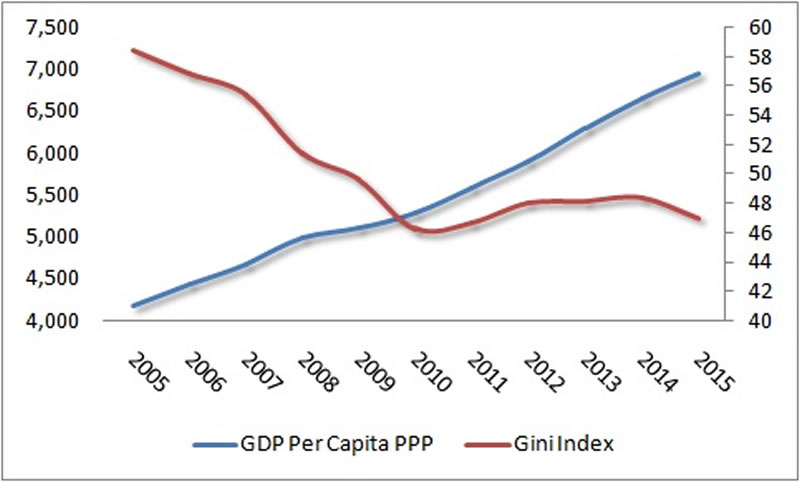
Since Morales came to power in 2005, the Bolivian government has become the main wealth generator in the country, distributing this funding through programs and social investments. As a result, since 2006, social spending in the area of health, education, pensions, and poverty alleviation programs has increased over 45 percent.teleSUR
A new report claims the U.S. government has secretly targeted Bolivian President Evo Morales with a drug sting code-named “Operation Naked King.” The report — just released by The Huffington Post this morning — draws on court documents filed by a longtime DEA confidential informant, Carlos Toro. It appears to confirm Morales’ long-standing suspicion that the U.S. Drug Enforcement Administration, or DEA, has sought to undermine Morales’ government.
In 2008, Morales expelled the DEA from his country, accusing the agency of bribing police officers, violating human rights, covering up murders and destroying infrastructure. Morales then embarked on his own strategy of combating drug trafficking by working cooperatively with coca growers to diversify crops and promote alternative development. His government’s efforts were largely effective: The United Nations announced last month that the cultivation of coca leaf in Bolivia has fallen to a 13-year low.
Despite that victory, the DEA announced this week plans to officially “decertify” Bolivia — a bureaucratic move that would cost Bolivia financial assistance, and amounts to an accusation by the DEA that Bolivia is not sufficiently cooperative in combating drug trafficking.…

When Bolivian President Evo Morales gave Pope Francis a crucifix atop a hammer and sickle, eyebrows were raised, including the pope’s.
But, as Morales explained, the cross was created by Jesuit Father Luis Espinal, who was assassinated in 1980 after being active in the country’s pro-democracy movement.Note: Pope Francis is a Jesuit.
Pope Francis on Wednesday praised Bolivia's social reforms to spread wealth under leftist President Evo Morales and urged the world not to view prosperity as material wealth, which he warned only breeds corruption and conflict.
Morales' strained relations with the Catholic Church have begun thawing under the Argentine-born pontiff's papacy, and he warmly embraced the pope seven years after denouncing the Church as "an instrument of domination".…Reuters
Ecuadorean President Rafael Correa said the opposition is deliberately trying to provoke problems in the country by spreading rumors. Ecuadorean President Rafael Correa denounced efforts by the opposition in his country to copy the strategy of the opposition in Venezuela and try to destabilize his government and the country. “Let's not fool ourselves, what has happened in Venezuela, in Argentina, what they tried to do to Evo (Morales)... is the permanent mobilization, (the strategy of) attrition, trying to create incidents,” said Correa, referring to violent street protests in Venezuela in 2014 and the recent attempt to link Argentine President Cristina Fernandez to the murder of a prosecutor. “But we are going to show, like in Venezuela, we are more, many more,” the president told local media Friday. In an effort to provoke problems in the country, supporters of the Ecuadorean opposition have recently tried to promote rumors that the government was planning to freeze bank accounts in the country. Correa quashed those rumors, saying, “The only problem banks have (right now) is that they're making too much money.” In a deeply unpopular move, the government of Ecuador froze bank accounts in 1999 in an effort to save private banks, causing chaos in Ecuador's financial system.
Ecuadorean President Rafael Correa has accused the US Central Intelligence Agency (CIA) of being involved in opposition protests in the country with the aim of dragging it into chaos. "There is a CIA presence there [in Ecuador's opposition] which has a goal of weakening the government," Correa said on Saturday during his weekly presidential address....
Opposition mayors of the country’s major cities, Quito and Guayaquil, Mauricio Rodas and Jaime Nebot respectively, recently met, in which they signed a manifesto calling on all Ecuadoreans to join them in “restoring democracy.” Despite the recent destabilization efforts by the Ecuadorean opposition, a recent international survey conducted by the Association of Political Communication found that the president received 79 percent approval making him the world’s second most popular president of Ecuador. In 1963, the U.S. intelligence led a military coup in Ecuador, against the leftist
President Carlos Julio Arosemena Monroy, after the leader criticized the U.S. government and showed its support to Fidel Castro’s revolution in Cuba. In 2013, the Ecuadoran news agency ANDES, reported that the CIA was planning to murder Correa and destabilize the country in retaliation for the removal of a U.S. military base from the country in 2009, as well as his decision to grant asylum to WikiLeaks founder, Julian Assange.....Telesur
Bolivian President Evo Morales is expected to discuss current U.S. agression towards Venezuela as well as the ongoing economic blockade against Cuba.Evo Morales To Give Speech At Latin American People’s Summit
Supporters of democracy ought to think long and hard before prosecuting people like Julian Assange, Bradley Manning, and Snowden. If we think that democracy is a good thing, then we must believe that the public should know as much as possible about what the government it elects is doing. Snowden has said that he made the disclosures because “the public needs to decide whether these programs and policies are right or wrong.”
He’s right about that. How can a democracy determine whether there should be government surveillance of the kind that the NSA is conducting if it has no idea that such programs exist? Indeed, Snowden’s leaks also revealed that National Intelligence Director James Clapper misled the US Congress about the NSA’s surveillance practices in his testimony at a hearing held in March by the Senate Intelligence Committee.Project Syndicate
Denying the Bolivian president air space was a metaphor for the gangsterism that now rules the world
Imagine the aircraft of the president of France being forced down in Latin America on "suspicion" that it was carrying a political refugee to safety – and not just any refugee but someone who has provided the people of the world with proof of criminal activity on an epic scale.
Imagine the response from Paris, let alone the "international community", as the governments of the west call themselves. To a chorus of baying indignation from Whitehall to Washington, Brussels to Madrid, heroic special forces would be dispatched to rescue their leader and, as sport, smash up the source of such flagrant international gangsterism. Editorials would cheer them on, perhaps reminding readers that this kind of piracy was exhibited by the German Reich in the 1930s.
The forcing down of Bolivian President Evo Morales's plane – denied airspace by France, Spain and Portugal, followed by his 14-hour confinement while Austrian officials demanded to "inspect" his aircraft for the "fugitive" Edward Snowden – was an act of air piracy and state terrorism. It was a metaphor for the gangsterism that now rules the world and the cowardice and hypocrisy of bystanders who dare not speak its name.
In Moscow, Morales had been asked about Snowden – who remains trapped in the city's airport. "If there were a request [for political asylum]," he said, "of course, we would be willing to debate and consider the idea." That was clearly enough provocation for the Godfather. "We have been in touch with a range of countries that had a chance of having Snowden land or travel through their country," said a US state department official....
Snowden's revelations are not merely about privacy, or civil liberty, or even mass spying. They are about the unmentionable: that the democratic facades of the US now barely conceal a systematic gangsterism historically identified with, if not necessarily the same as, fascism.The "F" word.
In revealing a vast Orwellian police state apparatus servicing history's greatest war-making machine, they illuminate the true extremism of the 21st century. Unprecedented, Germany's Der Spiegel has described the Obama administration as "soft totalitarianism".The Guardian

