Showing posts with label wisdom. Show all posts

Wednesday, October 15, 2014

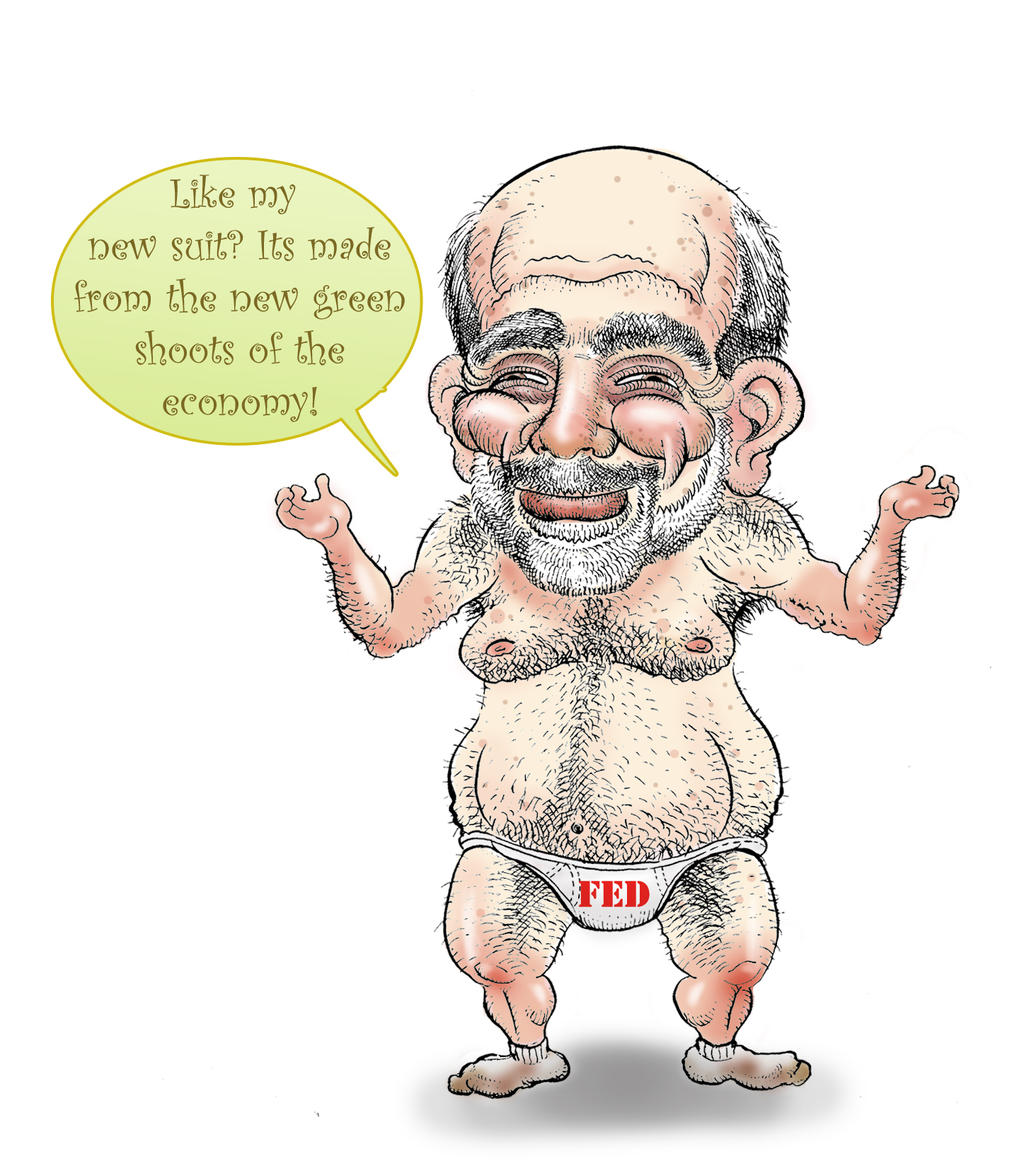
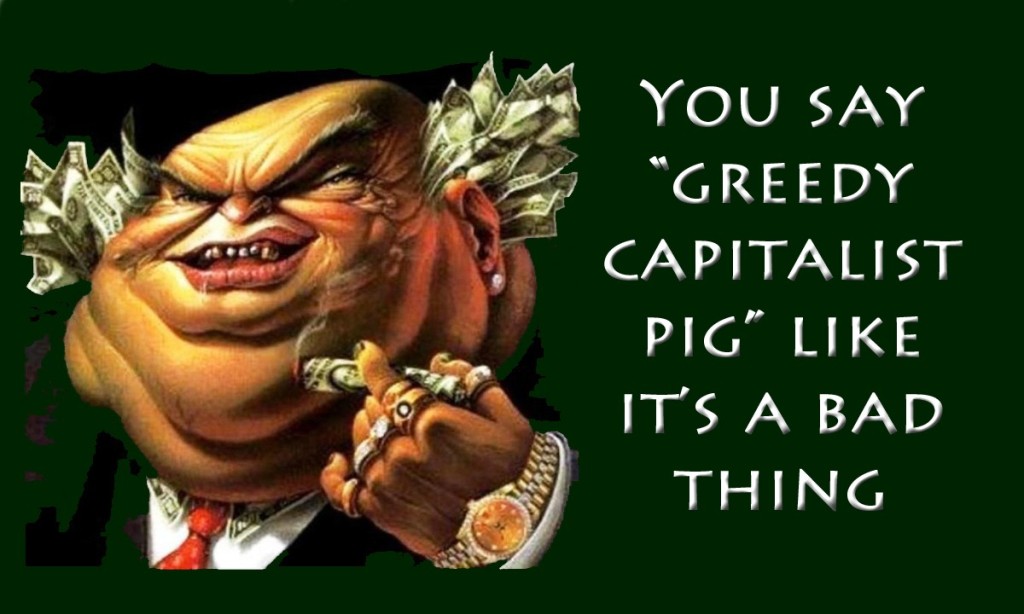
The Power Of The Wealth Lobby. It's Disgusting Hubris. Some Are Blind To It. Others See Wealth As Superior Wisdom.

   (Commentary posted by Roger Erickson)


So what's it gonna be? Democracy by crowd wisdom, or oligarchy by idiocracy? If the latter, why not Central Planning by other means?

What if the aristocracy have no brains, just blind greed?

EU Ideologues “Crowd Out” Sanity
“[The EU’s leaders] ‘don’t want the [European Investment Bank] EIB crowding out private investment.’ "
Let me get this straight, they don't want aggregate options to crowd out prerogatives claimed by the few?

Why not?

They don't LIKE the tide of progress, change & evolution ... AND democracy?

Let's see 'em try to stop it! No matter how "successful" they are, it'll start up again after their tombstone is placed (if not before).

There's no stopping King Cahoots? We'll see.
2

Carrying on, what's an anagram for all the oligarchs? (Or for Neo-Gliberals.)

Friday, September 19, 2014

David Brendel — How Philosophy Makes You a Better Leader

The goal of most executive coaching and leadership development is behavior change—help the individual identify and change the behaviors that are getting in the way of, and reinforce the behaviors associated with, effective leadership. But what about the beliefs and values that drive behavior? 
The benefits of introspection and reflection on one’s own character and beliefs receive less attention in a typical coaching session than the benefits of behavior change. Perhaps this is not surprising in our fast-paced and technology-driven business world, where there is little time to stop and think, and where people want (and are paying for) immediate outcomes. Despite growing recognition of the benefits of “mindfulness” activities (such as yoga and meditation) and an introverted style, self-reflection on philosophical issues—such as values, character virtues, and wisdom—is relatively neglected. Executive coaching and leadership development programs rarely include much, if anything, about the power of clarifying one’s philosophical world-view. But there is mounting evidence that they should. 
Neuroscience research on self-reflection supports this notion.…
How reflection makes you a better person.

"the life which is unexamined is not worth living." Socrates, in Plato's Apology, 38a

Harvard Business Review — HBR Blog Network
How Philosophy Makes You a Better Leader
David Brendel

Sunday, July 13, 2014

Tom Atlee — Comparing “Wisdom of the Crowds” to Real Collective Wisdom

“The Wisdom of Crowds” is about how accurate (or not) dozens or thousands of people are when they are guessing the number of beans in a bottle or predicting who is going to win the World Cup. The number of times their average collective guestimates are accurate is remarkable – which is the subject of Surowiecki’s book. But is that what WISDOM is really about? 
If some individual could predict the outcome of this year’s US elections, would we call them wise? Is that what we proclaim Christ or Buddha as wise for doing? 
I would love it if we would reserve the terms “wisdom” and “wise” for guidance that makes life better – especially useful guidance that makes life better for most or all of us – including all the creatures of this living, fragile Earth – over the long term. That’s what we need wisdom for, now more than ever. 
The traditions of the world’s great religions are one source of that wisdom, if we are mindful and heartful about which aspects of them we choose to follow, such as the near-universal Golden Rule of treating others the ways we would like to be treated. That’s wise. 
Various forms of systems thinking – from shamanism to ecology and complexity sciences – offer such wisdom because they deal with the wholeness and interconnectedness of the world. Nature’s ways of solving problems – as revealed by the sciences of biomimicry and evolution – also offers such guidance because nature’s solutions (and ways of generating solutions) have arisen and proven themselves through millions of years of testing.
Public Intelligence Blog
Tom Atlee: Comparing “Wisdom of the Crowds” to Real Collective Wisdom

Wednesday, November 20, 2013

Some May Find This Amusing. Many Other Citizens Are Left Baffled, Confused and Disoriented.

(Commentary posted by Roger Erickson)

Maybe sowing confusion is the real purpose?*

According to Chuck Lane, a longtime Editorial Writer for the Washington Post:
Banks aren’t the bad guys.
Chuck's entire essay establishes, at best, a vague position for a Washington Post editorial - so what is it's purpose?

Is he referring to some banks, or to no banks whatsoever? Or is he laying the cornerstone for the message that not all bank executives, or no bank executives whatsoever ... should ever be held accountable for their part in propagating significant local events as well as setting industry trends? How many readers - new or old - can tell exactly what Chuck means? Other's have different views on some of the points Chuck offers up, and even on the varying motives of diverse journalists.

Chuck Lane's current editorial - again, for the Washington Post, a prominent newspaper that prides itself on educating citizens - may, unfortunately, serve as a convenient reference for many future editorials seeking to slowly disorient and sway the views of an impatient public always in need of quick answers and consistent talking points.

What if some quick answers can be completely wrong, and even disastrously mal-adaptive? Can that be useful? One famous strategist, Napoleon Bonaparte, supposedly had a statement on just that topic. Undoubtedly, Napoleon wasn't the first to think this way, or the last.
"Never interrupt your enemy when he is making a mistake."
Does that strategy embody a helpful or harmful outlook for citizens of a supposed democracy? It all depends on the intended outcome, and where that intention falls in the spectrum between dog-eat-dog vs "a more perfect union"!

If Chuck Lane feels that some citizens are his enemies, it would be nice to know which citizens those are. All of us, or just some of us? And, if that's the case, exactly what mistake does he want to help us make? The mistake of NOT being an informed electorate? For propagandists, vaguely worded precedent statements serve the same function as subliminal advertising. Their only purpose is to prime the emotional disposition of audiences.

Chuck Lane's record and position also leaves many citizens truly baffled about the politics of the Washington Post's current and former owners. Do the WashPo's owners too, feel that some citizens of the USA are their enemies? This is very confusing ground, of course, but not the sort of situation we should be forced to wonder about when discussing the motives of a nationally prominent news organization.

When answers are needed, it helps to start with a useful question, and then pursue answers with adaptive methods. As George Washington supposedly wrote to James Madison: "Wisdom and good examples are necessary at this time to rescue the political machine from the impending storm." Unfortunately, Chuck Lane's current editorial on bank policy doesn't stand up as a very good example. If anything, it gums up our political machine and worsens the next impending storm.

Is there more to know about why Chuck is there at the Washington Post? At whose will? Whom does he serve? Are his messages just consistent cover for hidden goals?

* Lyndon LaRouche's writing was also spectacularly confusing and disorienting, but strangely effective - at least for the goal of advancing his, hard to fathom, personally desired outcome.


Saturday, March 10, 2012

Colin McGinn — Philosophy by Another Name


Some philosophers have physics envy, too, largely because they think that only real scientists get respect in the currency of contemporary culture.

Pitiful. Typifies what is wrong with academic philosophy. The obvious retort is. if you want to be considered a scientist, then do the math.

Oh right, academic philosophers in the US already did that by focusing attention on logical positivism in the early 20th century and then symbolic logic back in the Sixties.

Traditional inquiry about the enduring questions based on perennial wisdom went out the window. Just as contemporary New Classical economists do not read in the history of economics, so too, contemporary philosopher have abandoned the history of ideas.

As a result, philosophy now has bad name since it has not live up to its stated purpose, "philosophy" meaning love of wisdom. Contemporary academic philosophy aborted that search when scientists started getting all the respect, since they apparently felt left out, as McGinn's article shows.
The word “philosopher,” as everyone knows, means “lover of wisdom,” from the Greek. Its origin is sometimes attributed to Pythagoras, who is said to have coined it in order to distinguish people like himself from the sophists (both words have the same Greek root, “sophia”). Sophists, Pythagoras argued, are not genuine lovers of knowledge but only purveyors of rhetorical tricks, whereas another group of thinkers — those who possess a true “thirst for learning” — qualify as the real thing. This name stuck and came to be used to describe a very wide range of thinkers — anyone with a real intellectual interest. It is now, however, used extremely narrowly, at least within the academy, excluding people from most academic departments, but still applied to the few who study the subject now called “philosophy.”Those inquirers in other fields have new names more suitable to their specificity: physics, chemistry, biology, psychology and history among them. But philosophy is still called by the old highly general name Pythagoras introduced. And here we already see an obvious objection to the label: Isn’t everyone employed in a university, and indeed some people beyond, a “lover of wisdom”?
Most academics are not “sophists”! Physicists, say, have the attitude described as much as philosophers. But why should one particular discipline be characterized by reference to an attitude instead of a subject matter?
Here is a "philosopher" who does not know the meaning of the term "wisdom" as used by the ancients.

One the first day of my first class in philosophy in 1959 as a college junior, the meaning of "philosophy" was explained in detail. We learned that "philosophy" was Greek for love of wisdom and that "philosophy" in ancient times signified a way of life dedicated to the pursuit of wisdom. The goal of the genuine philosopher was to become a sage rather than simply a purveyor of information about the material side of life.

Significantly, the two most influential philosopher-sages in the West have been Socrates and Jesus, neither of whom either was an academic nor did either of them write a word. But their influence is still pervasive, and Western culture is inconceivable without their seminal contributions to living the good life and attaining wisdom, which Socrates called "self-knowledge" and Jesus "the kingdom," through the core spirituality taught by the sages of perennial wisdom of all times and climes.

Actually, I agree with McGinn that academic philosophy should change its name to distinguish itself as emulating scientists rather than sages. The present approach to philosophy in academia dishonors the discipline and has relegated it to comparative irrelevance.

OK, maybe I am being too hard on Professor McGinn. His work demonstrates keen interest in the most important philosophical subjects of the day, including the philosophy of consciousness, which is the next frontier. But I stand by what I have written about the views stated above.

Read it at The New York Times
Philosophy by Another Name
By Colin McGinn | Professor and Cooper Fellow, University of Miami