Showing posts with label liberal internationalism. Show all posts

Monday, November 11, 2019

Harper — Neocons Still Promote Permanent Revolution

Backgrounder on neoconservatism and its marriage of convenience with liberal internationalism (Wilsonianism).
Does the permanent warfare of today's neocons differ in any real way from the Trotsky idea of permanent world revolution? Socialism has been replaced by democracy-promotion but that difference is small, particularly as the consequences continue to play out on the world stage.
This prompts the question as to why Donald Trump has appointed neoconservatives like John Bolton when he is a Jacksonian nationalist and populist?

One reason could be that the deep state is populated with foreign policy idealists rather than foreign policy realists, and these types and appointments are typically made from the bench of the deep state. A reason may be to placate it, since the deep state is in a position o be disruptive enough to diminish a president's political capital, with respect to its control of the narrative through leaks and anonymous sources that feed the media. 

The deep state can also deploy more direct means, as is evident now in the lead up to the impeachment, where one of the president's "crimes" according to the deep state is highjacking US foreign policy, even though the president is actually in charge of it.

Endless war as envisioned by the promoters of permanent revolution in the cause of "spreading freedom and democracy" (read neoliberal globalism) as the "Pax Americana" fits perfectly with the warfare state the military Keynesianism that funds government expenditure through the military-industrial-governmental complex.

 Jacksonians are just as insistent on carrying a big club as Wilsonians, although they are less wont to use it through wars of choice. The president prefers to use US economic power as the first-line tool of hybrid warfare rather than relying on military force. It's still "America First" in terms of geopolitics but the strategy is different from neoconservatives and liberal interventionists.

I must confess that I was taken in by the propaganda in the lead in to Vietnam but was radicalized when I discovered the truth while I was serving a US naval officer in the Western Pacific at the time and watched things go downhill from there. Yet the US keeps coming back for more and more of the same. Why? Is it stupidity or the money and power — after all, world domination is on the table. That is hard to walk away from if one strongly believes that one pick it up with relative impunity.

Wednesday, January 2, 2019

John Perry — The True Nature of US Interventions

‘Make America Great Again’: Trump’s slogan seems both to yearn for a time when the United States had more influence, and to call for its pre-eminence to be restored. In its own way, it asserts that the US is – or should be – different. In fact it was only Trump’s predecessor, Obama, who was the first president to talk regularly about American exceptionalism, yet to Trump it is something that is long lost and it is his job to recover it. Yet belief in the US’s exceptional nature has been a constant feature of the country’s history, whoever has been president, and continues right up to the present day.
Its starting point in the early nineteenth century was the ‘Monroe doctrine’, the assertion of the US’s pre-eminent power in the western hemisphere, replacing the old colonial powers such as Spain and Portugal. Its domestic counterpart was the US’s God-given ‘manifest destiny’, which justified settlement of the whole North American continent, regardless of the presence of the people to whom much of the land already belonged. Whereas the Monroe doctrine at first reflected a degree of respect for the then newly emerging Latin American nations, by the end of the century it only thinly disguised a new kind of imperialism which justified US intervention anywhere in the hemisphere.
Soon after the end of the second world war, the former ‘great powers’ began to give up those colonies that had not already been returned to their rightful owners. But, fuelled by the cold war, the US began a new phase of imperialism. Dan Kovalik, in his new book The Plot to Control the World, quotes a report, which he says is almost certainly an underestimate, that the US interfered in 81 foreign elections between 1946 and 2000. And even that number omits more serious interventions such as US-provoked coups, assassinations and invasions. Yet, as Kovalik says, ‘American exceptionalism’ requires a belief that the US is a unique force for democracy and freedom in the world. This enables the New York Times to justify US interference in the affairs of other countries because the US is unique in using its power to challenge dictators or otherwise promote democracy, whereas Russia (say) more often intervenes to disrupt democracy or promote authoritarian rule... 
Counterpunch
The True Nature of US Interventions
John Perry


Saturday, December 22, 2018

Martin Sieff — Woodrow Wilson Goes to Europe: One Hundred Years of Delusional American Madness

We are now in the dubious position of “celebrating” – if that is the word – the 100th anniversary of US President Woodrow Wilson’s departure on December 4, 1918 on the liner SS George Washington for the Versailles Peace Conference where he was confident he would dictate his brilliant solutions that would end war in the world for all time.
Historians and psychiatrists – including Dr. Sigmund Freud himself who co-authored a book on Wilson – have endlessly debated whether Wilson was sane and just deluded or raving mad. Freud clearly inclined to the latter view. And he had ample evidence to support him. What is most alarming is that, as Henry Kissinger – significantly not born an American at all – points out, all US presidents either share Wilson’s ridiculous messianic fantasies or feel they must pretend to....
Wilson is the father of liberal internationalism in international relations, and it's progeny, liberal interventionism and US global hegemony because American exceptionalism. I am not sure that delusion madness is the only factor, although it is a chief factor. The other chief factor is tying this madness to neo-imperialism and neocolonialism as concomitants of capitalism American-style.

Liberal internationalism is also called liberal idealism in foreign policy, and both liberal internationalism and liberal idealism are called Wilsonianism.

Wilsonianism is opposed by foreign policy realism, which sometimes equated with Realpolitik, although foreign policy realism is a broader category than Realpolitik. Realism focuses on national interest as the criterion in foreign policy and international relations. It is conservative in the political tradition of Thomas Hobbes and Niccolò Machiavelli. Its chief proponent recently is Henry Kissinger. Of course, in speaking of "national interest" the question arises over exactly whose interests, since nationals are not homogenous.

Martin Sieff offers an appraisal of the insanity of some US Wilsonian presidents.

Strategic Culture Foundation
Woodrow Wilson Goes to Europe: One Hundred Years of Delusional American Madness
Martin Sieff, senior fellow of the American University in Moscow, former chief foreign correspondent of The Washington Times, and former managing editor, international affairs, for United Press International

Friday, September 28, 2018

Christopher R. Hill — Reclaiming American Internationalism

US President Donald Trump has managed to attract support for his "America First" isolationism not by dint of his own arguments, but because the US foreign-policy establishment abandoned its own values. After decades of thoughtless military interventionism, it is little wonder that Americans would seek an alternative.…
A grownup speaks on semi-official channel. The voices of the grownups have been suppressed in the corporate media and only found expression in alternative media.

One can be for liberal internationalism but against liberal interventionism as both against international law unless mandated by the UNSC, and also as not only unproductive but also damaging, without being "unpatriotic" by opposing US foreign and military policy.

Liberal interventionism, neoconservatism, and war hawkishness have all but destroyed American soft power through reliance on hard power.

What US leaders don't seem to understand is that they are killing the goose that lays the golden egg out of lust for power and greed for global hegemony.

Actually, if America created "empire" by pursuit of liberalism through soft power, it would be win-win for all, since it would facilitate commerce and raise the level of global prosperity while also increasing the level of collective consciousness.

Empires have advantages but those advantages are lost when they get in their own way by decreasing the common good instead of increasing it through greater efficiency and lower transaction costs, while spreading positive values culturally through exchange.

Instead, the US has adopted a policy of "My way or the highway," and "If you are not with us, you are against us." The result is the winding down of the unipolar world order operative since WWII and the rise of a multipolarism that is tending toward a resumption of great power politics.

Dumb and short-sighted. It will end badly.

Project Syndicate
Reclaiming American Internationalism
Christopher R. Hill |  formerly US Assistant Secretary of State for East Asia, US Ambassador to Iraq, South Korea, Macedonia, and Poland, a US special envoy for Kosovo, a negotiator of the Dayton Peace Accords, and the chief US negotiator with North Korea from 2005-2009; nos Chief Advisor to the Chancellor for Global Engagement, Professor of the Practice in Diplomacy at the University of Denver, and the author of Outpost.

Also at PS

Mark Leonard makes some good points but puts the US blame on President Trump when the issues began with JFK's invasion of Cuba and Vietnam, LBJ's escalation of the war, Richard Nixon' s expansion of the war to all of Indochina, Jimmy Carter's unwise embrace of Zbigniew Brzezinski and his grand chess board policy, Ronald Reagan's jingoistic foreign adventures, G. W. H. Bush's invasion of Kuwait, Bill Clinton's invasion of Yugoslavia and advance of NATO, G. W. Bush invasion of Afghanistan and Iraq, and Barack Obama's invasion of Libya and Syria. Donald Trump's appointment of John Bolton and Nikki Haley are continuation's of that failed approach. So Leonard's recommendation to return to it is nonsense.


Present at the DestructionMark Leonard | Director of the European Council on Foreign Relations

Sunday, August 12, 2018

Ryan Zielonka — The World According to Realism


Useful backgrounder on international relations and the different schools of thought in the US, particuarly liberal internationalism, neoconservatism and realism. 

Quillette
The World According to Realism
Ryan Zielonka is an independent consultant and incoming PhD student at the University of Washington

Wednesday, July 25, 2018

Nathan J. Robinson — Liberalism And Empire

Krugman believes that Trump is threatening to destroy America’s great “empire” and that this is bad, because our country’s “empire” is good and noble. Trump, Krugman suggests, is an aberrant departure from the lofty values and ideals that have guided our foreign policy for most of the past century.
Unfortunately, Robinson doesn't cite the warning of the founding fathers about avoiding entangling alliances, and that failure to do so would insert the fledging US into the same politics as Europe, with the ensuing wars. Not only was there a long history of the dynamic in Europe at the time, but WWI would demonstrate this again, resulting in the remaking of the map of Europe and initiating a new historical period that would see WWII and many related conflict thereafter.
It is our true policy to steer clear of permanent alliance with any portion of the foreign world — George Washington, Farewell Address (1796)
Peace, commerce, and honest friendship with all nations-entangling alliances with none. — Thomas Jefferson, First Inaugural Address (1801)
The US did not sign any permanent treaties of alliance prior to WWII, after which the United Nations, the UNSC, the IMF, the World Bank, etc. were established as permanent international organizations, and NATO was established as a permanent military alliance that is still expanding. The US now has a global military presence with attendant commitments.

Where is Paul Krugman coming from? He is talking out of his field. And he is not alone. 

These people seem unaware of American history and what the long-standing policy of the US was prior to WWII, not to mention the values and thinking on which this policy stance was based. These values and thinking were instrumental in the undertaking of rebellion against British rule, the ensuing American Revolution, and the founding of the American Republic. 

But the US could not avoid the imperialistic urge at the close of the rush for colonies by the competing European powers. But about all that was left then was the Philippine Islands.

Woodrow Wilson also broke with the tradition of staying out of European affairs by involving the US in the (failed) League of Nations. This attempt at internationalism lead to the establishment of international institutions that would later undermine national sovereignty and present the opportunity for neo-imperialism through their control. NATO was a military entangling alliance that commits the members to go to war on behalf of any member that is attacked by a non-member.

The Federal Reserve System was also established under Wilson (Dec. 1913). This would lead the US into entanglement with the other central banks and financial interests through the establishment of the Bank of International Settlements.*

Just what is "American" about this? What is treasonous about attempting to follow the warnings of the founding fathers and early presidents about entangling alliances and avoiding foreign wars unless in defense of vital national interests. I haven't seen anything remotely like the mission of American to spread freedom and democracy or American values in the founding documents or the debates about their formulation. Who is being out of line here? America Firsters like Trump, or neocons that gave the us Iraq or the liberal internationalists that gave us Vietnam, both wars of choice.

Oh, and there there is this.

Vladimir Ilyich Lenin, Imperialism, the Highest Stage of Capitalism. But Lenin couldn't possibly have known anything about what he was addressing, right?

Current Affairs
Liberalism And Empire
Nathan J. Robinson | Editor of Current Affairs

The powers of financial capitalism had (a) far-reaching aim, nothing less than to create a world system of financial control in private hands able to dominate the political system of each country and the economy of the world as a whole. This system was to be controlled in a feudalist fashion by the central banks of the world acting in concert, by secret agreements arrived at in frequent meetings and conferences. The apex of the systems was to be the Bank for International Settlements in Basel, Switzerland, a private bank owned and controlled by the world's central banks which were themselves private corporations. Each central bank... sought to dominate its government by its ability to control Treasury loans, to manipulate foreign exchanges, to influence the level of economic activity in the country, and to influence cooperative politicians by subsequent economic rewards in the business world."   
Carroll Quigley, Tragedy and Hope: A History of the World in Our Time. New York: The Macmillan Company, 1966, VII, page 324.

Carroll Quigley (1910-1977) | Professor of History at Georgetown University, member of the Council on Foreign Relations (CFR), mentor to Bill Clinton.

This quote begins a section of the chapter on the BIS.

Tragedy and Hope and other Quigley works are available at archive.org and his site.


Tuesday, July 10, 2018

Eric Zuesse — Vladimir Putin’s Basic Disagreement with The West


In summary, Putin advocates national sovereignty and opposes liberal internationalism and liberal interventionism based on as another form of imperialism. The West, the reverse.

More broadly, Russia is traditional while the West is liberal.

This basis of the broader conflict between the East and West, Global North and Global South. 

This conflict is dialectical.

The economic basis is capitalism versus socialism.

Both capitalism and socialism are internationalist.

This indicates that the historical dialectic at this point is about the determining the type of globalization in terms of ideological framework and political control.

Will the future be dominated by global capital or something else more along traditional lines.

The present from of capitalism is neoliberalism, which implies neo-imperialism and neocolonialism.

If this is not to become the dominant framework, what is?

I don't see Putin or anyone else very being clear on this. As a Russian Orthodox traditionalist and Westphalian nationalist, he seems to be looking backward rather than forward. 

The Chinese leadership has the most articulated and nuance alternative that combines elements of traditionalism, nationalism, globalism, socialism, and capitalism.

We probably won't know much about this until the fog of war clears and the dust begins to settle.

The Vineyard of the Saker
Vladimir Putin’s Basic Disagreement with The West
Eric Zuesse

See also
As US President Donald Trump and Russian President Vladimir Putin prepare to meet in Helsinki, all eyes are on what generally are regarded as the “usual” political issues that divide the world’s two foremost military powers: Ukraine, Syria, sanctions, claims of election interference, and so forth. This reflects the near-universal but erroneous view that this current, second Cold War is not ideological, as opposed to the first Cold War that pitted atheistic Soviet communism against America’s “in God we trust” capitalism. (Leave aside whether “capitalism,” an anarcho-socialist term popularized by Marxists, is the proper description of contemporary neoliberal corporatism.)…
Such a view totally dismisses the fact that following the demise of communism as a global power bloc there has been an eerie spiritual role reversal between East and West. While it’s true that during original Cold War the nonreligious ruling cliques in Washington and Moscow held basically compatible progressive values, ordinary Christian Americans (mainly Protestants, with a large number of Roman Catholics) perceived communism as a murderous, godless machine of oppression (think of the Knights of Columbus’ campaign to insert “under God” into the Pledge of Allegiance). Conversely, today it is western elites who rely upon an ideological imperative of “democracy” and “human rights” promotion to justify a materialist global empire and endless wars, much like the old Soviet nomenklatura depended on Marxism-Leninism both as a working methodology and as a justification for their prerogatives and privileges,. In that regard, promotion of nihilist, post-Christian morality – especially in sexual matters – has become a major item in the West’s toolkit.…
This has a special importance with regard to Russia, where under Putin the Orthodox Church has largely resumed its pre-1917 role as the moral anchor of society. This elicits not only political opposition but a genuine and heartfelt hatred from the postmodern elites of an increasingly post-Christian West, not only for Putin personally and Russia generally but against the Russian Orthodox Church – and by extension against Orthodox Christianity itself....
 The article is longish and somewhat detailed, but it relates to the Zuesse article posted above. Many Americans would likely regard it as somewhat arcane and irrelevant in today's world as they experience it. Well, wait for what's coming in the political tussle over the Donald Trump's nomination of Judge Brett Kavanaugh to the US Supreme Court.

These issues are already hot-buttons in the US. In the argument over what "religious freedom" means in the text, context and historical intent of the US Constitution, The liberal side argues it means freedom from religion and the traditionalist (conservative) side argues it means freedom to practice one's religion without government interference. Stay tuned.

Strategic Culture Foundation
The two-pronged attack on Orthodoxy and Russia
James George Jatras | Analyst, former U.S. diplomat and foreign policy adviser to the Senate GOP leadership

See also

More traditionalism vs. liberalism.
The fact that the Catholic Church is strong in Poland makes a difference, because it gives us a mental and spiritual access to ideas and sensibilities that have evaporated in the secular West.…
Is liberalism on a collision course with Christianity as well as Islam?

Zero Hedge
Polish Politician Warns Of Europe's "Degenerate Liberalism"
Tunku Varadarajan, originally published op-ed at The Wall Street Journal

See also

Zero Hedge
The End Is Near? Pope Decries Governments Turning Earth Into Vast Pile Of "Rubble, Deserts, & Refuse"
Tyler Durden

Sunday, June 17, 2018

Charles Pierson — The Day the US Became an Empire

One could argue that the US has always been an empire. Thomas Jefferson called the US an empire, but an “empire of liberty” dedicated to spreading freedom around the globe. Tell that to the Native Americans killed and dispossessed by White Settlers. Tell that to the Mexicans. The US seized a third of their country through war. Still, it wasn’t until 1898 that the US acquired its first overseas colony.
Hawaii had been an independent nation. In 1887, American planters in the islands had forced a change to the Hawaiian constitution which largely disenfranchised ethnic Hawaiians to the benefit of wealthy Whites. By 1893, with US support, American and European businessmen on the islands had staged a coup d’ĂŞtat, overthrowing the monarchy,[1] and establishing a Republic of Hawai’i; from there, they maneuvered for Hawaii’s annexation in 1898. That same year, Cuba, the Philippines, Puerto Rico, and Guam would be gathered into the fledgling American Empire, fruits of the US victory in the Spanish-American War....
"Thomas Jefferson called the US an empire, but an 'empire of liberty' dedicated to spreading freedom around the globe." This is the basis of liberal internationalism, liberal interventionism, and neoliberal globalization under American "leadership."

Counterpunch
The Day the US Became an Empire
Charles Pierson

Thursday, July 20, 2017

Alastair Crooke — How Trump Defines the Future

President Trump has defined the future as a battle between old-style nationalism and neoliberal globalism, a challenge that the West’s elites mock at their own peril, as ex-British diplomat Alastair Crooke describes.
As the world globalizes, there is a dialectic going on over which factors should predominate — international v. national, sovereign v. subject, unipolar v. multipolar, liberal v. traditional, capitalism v. democracy, etc.

Alstaire Crooke observes that this is no longer largely a difference between power blocs — East and West, or North and South — but rather involves fierce in-house political disputes among contending factions and vying political constituencies within countries.

The outcome is uncertain and it is already involving considerable conflict domestically and internationally. 

Presently, the world is realigning geopolitically and geostrategically as countries rethink their future and lay track for a path to it. As a result the world is becoming more precarious.

Consortium News
How Trump Defines the Future
Alastair Crooke | founder and director of the Conflicts Forum, and former British diplomat and senior figure in British intelligence and in European Union diplomacy

Monday, July 17, 2017

Nafeez Ahmed — Pentagon study declares American empire is ‘collapsing’

Report demands massive expansion of military-industrial complex to maintain global ‘access to resources’ 
n the first of a series, we report on stunning new evidence that the U.S. Department of Defense is waking up to the collapse of American primacy, and the rapid unraveling of the international order created by U.S. power after the Second World War.
But the Pentagon’s emerging vision of what comes next hardly inspires confidence. We breakdown both the insights and cognitive flaws in this vision. In future pieces we will ask the questions: What is really driving the end of the American empire? And based on that more accurate diagnosis of the problem, what is the real solution?
"We need a blank check."

Incidentally, the Vietnam War was sold to the public based on the "spread of freedom and democracy," and the domino effect. I was serving on active duty as an officer in the US Naval Reserve at the time and according to the DOD, maintaining access to resources in Southeast Asia and denying them to the enemy was a chief reason for making US  domination of the region a high strategic priority.

Here we go again.
The document is particularly candid in setting out why the U.S. sees these countries as threats — not so much because of tangible military or security issues, but mainly because their pursuit of their own legitimate national interests is, in itself, seen as undermining American dominance.
Russia and China are described as “revisionist forces” who benefit from the U.S.-dominated international order, but who dare to “seek a new distribution of power and authority commensurate with their emergence as legitimate rivals to U.S. dominance.” Russia and China, the analysts say, “are engaged in a deliberate program to demonstrate the limits of U.S. authority, will, reach, influence, and impact.”
The premise of this conclusion is that the U.S.-backed “status quo” international order is fundamentally “favorable” for the interests of the U.S. and its allies. Any effort to make global order also work “favorably” for anyone else is automatically seen as a threat to U.S. power and interests....
The document also sets out the real reasons that the U.S. is hostile to “revolutionary forces” like Iran and North Korea: they pose fundamental obstacles to U.S. imperial influence in those regions. They are:
“… neither the products of, nor are they satisfied with, the contemporary order… At a minimum, they intend to destroy the reach of the U.S.-led order into what they perceive to be their legitimate sphere of influence. They are also resolved to replace that order locally with a new rule set dictated by them.”
Far from insisting, as the U.S. government does officially, that Iran and North Korea pose as nuclear threats, the document instead insists they are considered problematic for the expansion of the “U.S.-led order.”...
Summing it up.
This is a war, then, between US-led capitalist [neoliberal] globalization, and anyone who resists it.
And to win it, the document puts forward a combination of strategies: consolidating the U.S. intelligence complex and using it more ruthlessly; intensifying mass surveillance and propaganda to manipulate popular opinion; expanding U.S. military clout to ensure access to “strategic regions, markets, and resources”.
Even so, the overarching goal is somewhat more modest — to prevent the U.S.-led order from collapsing further:
“…. while the favorable U.S.-dominated status quo is under significant internal and external pressure, adapted American power can help to forestall or even reverse outright failure in the most critical regions”.
The hope is that the U.S. will be able to fashion “a remodeled but nonetheless still favorable post-primacy international order.”
INSURGE intelligence - Medium
Pentagon study declares American empire is ‘collapsing’
Nafeez Ahmed

Sunday, July 16, 2017

Stephan Richter — The liberal international order: Just who shredded it?

Smackdown.
To see where we are — the United States needs to take a look at it's recent past.…
The truth is that it wasn’t Putin — or even Trump now — as much as George W. Bush and his reckless foreign policy cowboys — remember Cheney, Rumsfeld, Wolfowitz, all names that should live in infamy — who did most of the shredding of that liberal international order.
They committed acts of war that were clearly criminal in nature. Their only saving grace was — and is — that they have a U.S. passport.
Otherwise, they would all find themselves in the dock at the ICC in The Hague, where indeed they belong.
Still, Obama did not break with his predecessor’s Bush league approach. Deliberately obscure mandates in Iraq simply changed topic, gone were the torture memos, in where drone strike memos.
Put yourself into the shoes of a Russian or Chinese policymaker for a moment – and ask any one of these four questions:
Salon
The liberal international order: Just who shredded it?
Stephan Richter | the publisher and editor-in-chief of The Globalist

Steve MacMillan — Brzezinski Wanted NATO to Become the “Hub of a Globe-Spanning Web” of Security Pacts


Another one for the Brzezinski file.

NEO
Brzezinski Wanted NATO to Become the “Hub of a Globe-Spanning Web” of Security Pacts
Steve MacMillan

Friday, June 16, 2017

Andrew J. Bacevich — The ‘Global Order’ Myth


A good article but Col. Bacevich focuses on the liberal interventionist view of the global order in terns of US interests in terms of the current controversy over the presidency of Donald Trump.

Liberal interventionism and the imposition of a global order under liberalism is Wilsonianism, whose history goes back to the presidency of Woodrow Wilson and the the post WWI era. It crystallized post WWII when the US emerged as one of the two superpowers, contending the USSR.

Subsequent to the collapse of the USSR, the US leadership proclaimed victory and the right to permanent global hegemony under the liberal order, along with the right to impose this order on others as the US say fit.

Col. Bacevich, a historian, calls BS on this attempt to portray the pursuit of US interests as "spreading freedom and democracy" and preserving the liberal order and liberal globalization. This is just a euphemism for putting America first through foreign adventurism and nation building that has led to endless war.

The American Conservative
The ‘Global Order’ Myth
Col. Andrew J. Bacevich, US Army (ret.) | Professor Emeritus of International Relations and History at the Boston University Frederick S. Pardee School of Global Studies, and writer-at-large at The American Conservative

Monday, April 3, 2017

JW Mason — A Cautious Case for Economic Nationalism

How do we negotiate these three terms—nation-states, markets, and the people who we hope to represent within or against them? If you’re an economist, one natural starting point is Dani Rodrik’s widely cited formula of “the trilemma.” Rodrik argues that, of national sovereignty, democratic government, and international economic integration, you can have two of them but not all three. When Rodrik introduced the trilemma in the 1990s he, like most liberals, believed it was the nation that should go. Globalization is inevitable; if it prevents national governments from delivering what’s needed for democracy, then political authority must shift to a supranational level. But now he’s having second thoughts. Recently he wrote in the New York Times, “We must reassess the balance between national autonomy and economic globalization . . . we have pushed economic globalization too far . . . [and put] democracy to work for the global economy, instead of the other way around.”
For both liberal advocates of economic integration and for its critics, this question, the political question, is key. The strongest arguments against (and for) continued globalization focus not on the direct effect of trade and finance on living standards and economic outcomes, but on the ways in which those links constrain the choices of governments. As long as democratic politics operates through nation-states, it is likely any left program will require some degree of delinking from the global economy.
Dissent
A Cautious Case for Economic Nationalism
JW Mason | Assistant Professor of Economics, John Jay College, City University of New York

Sunday, April 2, 2017

Akhilesh Pillalamarri — The Bitter Fruits of Wilsonianism


Theodore Roosevelt's nationalist realism opposed to Woodrow Wilson's internationalist idealism. Historical backgrounder.

The American Conservative
The Bitter Fruits of Wilsonianism
Akhilesh Pillalamarri, editorial assistant at The American Conservative

Monday, March 6, 2017

Tony Smith — Is Liberal Internationalism Dead?


History lesson. Woodrow Wilson versus Donald Trump.

Does the global progress depend on American leadership?

Project Syndicate
Is Liberal Internationalism Dead?
Tony Smith, Professor Emeritus of Political Science at Tufts University

See also
But if the revolutionaries take their war against the state too far, they face a different problem, because members of the old establishment are the only people who know enough about specific government programs to get anything done. Ultimately, the revolutionaries must try to strike a balance between betraying their supporters’ radical wishes and escalating their conflict with the state to the point that no other policy goals can be achieved.
This is the crux of the problem. The modern bureaucratic state arose in Prussia at the time that Germany was being unified into a nation the late 19th century.

The problem with the bureaucratic state is that it is highly effective and efficient in comparison with other types of state organization, but it is also the basis for a shadow government that is the actual government that persists across changes in political power.

The first question is whether Trump-Bannon can "deconstruct the administrative state." The second what will replace it and how effective and efficient it will be in comparison.

Trump’s Revolutionary Dilemma
Harold James | Professor of History and International Affairs at Princeton University and a senior fellow at the Center for International Governance Innovation

Thursday, February 16, 2017

Adrian A. Basora and Kenneth Yalowitz — Democracy Promotion Is Smart Security Policy


Two former US ambassadors advocate for "democracy promotion" abroad to enhance US national security.
Excluded from these efforts will be countries like Russia and Uzbekistan, where the effort would be futile and/or discredit democracy promotion by validating regime propaganda that equates these programs with aggressive intrusion into domestic affairs.
The National Interest
Democracy Promotion Is Smart Security Policy
Adrian A. Basora, formerly U.S. ambassador to the Czech Republic and presently director of the Foreign Policy Research Institute Eurasia Program and Project on Democratic Transitions, and Kenneth Yalowitz, formerly U.S. ambassador to Belarus and Georgia, and presently director of the Conflict Resolution Program at Georgetown University and a Global Fellow at the Woodrow Wilson Center.

Wednesday, February 15, 2017

Richard N. Haass — World Order 2.0 — The Case for Sovereign Obligation


Contra "America First," CFR president Richard Haass makes a case for neoliberalism an liberal internationalism as the foundation for globalization, including liberal interventionism, R2P, and neoconservatism as foundational to American "Trotskyism" as a matter of noblesse oblige aka paternalism.

Council on Foreign Relations
World Order 2.0 — The Case for Sovereign Obligation
Richard N. Haass, President, Council on Foreign Relations

Saturday, October 22, 2016

Robert Parry — Washington’s New Lock-Step March of Folly


Good analysis. What I would question though is his assessment of Tulsi Gabbard.
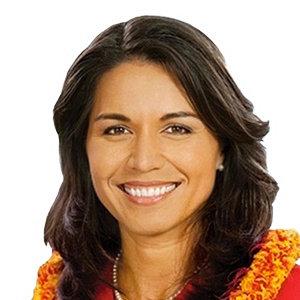
One potential leader of a peace movement would be Rep. Tulsi Gabbard, D-Hawaii, a 35-year-old military veteran who is one of the few members of Congress to offer an insightful and courageous critique of the dangers from an interventionist foreign policy. But Gabbard would be putting her promising political career at risk if she challenged a sitting Democratic president, especially early in Clinton’s White House term.

Rep. Tulsi Gabbard, D-Hawaii.
Yet, without a modern-day Eugene McCarthy (the anti-Vietnam War Democrat who took on President Lyndon Johnson in 1968) to rally an anti-war movement from inside the Democratic Party, it is hard to imagine how significant political pressure could be put on a President Hillary Clinton. Virtually the entire mainstream U.S. media (and much of the progressive media) are onboard for a U.S. “regime change” operation in Syria and for getting tough with Russian President Vladimir Putin.
I expect Gabbard to oppose liberal interventionism very strongly. She has already burnt her bridges to the Democratic establishment, and her political future lies with the future rather than the past. 

The Democratic establishment is on the way out since it runs counter to the geographic dynamics. 

If Clinton wins, she will be the last of the New Democrats. and her administration will crater the Democratic establishment. 

Who do the Democrats think the rising generations prefer, Tulsi Gabbard or Madeliene Albright and Samantha Power?

Consortium News
Washington’s New Lock-Step March of Folly
Robert Parry